Quick answer: A drain smell usually means sewer gas is getting past a water trap, or rotting build-up is sitting in the waste pipe. Start with the trap: run water in every fixture for 30 seconds, especially one that has not been used for a while. If the smell fades within a day, a dry trap was the cause. If it stays, if several fixtures smell at once, or if drains gurgle or back up, the problem is deeper — a blocked vent, a failed seal, or a cracked pipe — and that is engineer work. A CCTV drain survey costs around £160 for a basic survey as a UK guide average (Checkatrade, October 2026).
A bad smell from a drain is easy to dismiss. It is worth taking seriously, because it tells you something about the pipework behind the wall. Sometimes it is a five-minute fix. Sometimes it is the first warning of a cracked drain under the floor. This guide helps you tell the difference, without masking the smell and hoping it goes away.
Which smell is yours?
- One sink, shower or bath smells, everything else is fine — a local problem: a dry trap, dirty plughole, or build-up in that fixture’s waste pipe. Start with the safe checks below.
- The smell appears after a holiday, or in a rarely used bathroom — almost certainly a dry trap. Water in the trap has evaporated and sewer gas is coming straight up.
- The smell comes and goes, and drains gurgle when another fixture is used — a vent or pressure problem is pulling water out of traps. Stop at the checks and call an engineer.
- The smell is everywhere, or sewage is backing up — a main-drain or sewer problem. Stop using water and call an engineer the same day.
- A fishy smell near a socket, switch or fuse box — that is not a drain smell at all. It can mean overheating electrical parts. Do not investigate it yourself; call an electrician.
What causes a smelly drain: the causes in order
| Cause | What you will notice | Safe to try yourself, or engineer job |
|---|---|---|
| Dry trap — water in the U-bend has evaporated | Smell from one unused sink, shower, bath or floor gully; worse after a holiday | Safe to try — run water for 30 seconds to refill the trap |
| Biofilm and build-up — grease, soap, hair and food rotting in the waste pipe | Musty or sour smell from one fixture; drain may also run slowly | Safe to try — clean the plughole and overflow, flush with hot water |
| Dirty or blocked trap — debris sitting in the trap itself | Smell close to the plughole; debris visible when the trap is opened | Safe to try — clean the trap by hand if it unscrews easily |
| Failed toilet seal or loose toilet base — sewer gas escaping at the floor | Sewage smell around the toilet, even when it flushes normally; base may rock | Engineer — resealing a toilet is not a homeowner job |
| Blocked or damaged soil vent pipe — the vent that lets sewer gas out above the roof | Smell returns in wet or windy weather; gurgling when other fixtures drain | Engineer — vent work can mean roof access |
| Cracked, displaced or collapsed pipe — sewer gas and waste leaking from the pipe itself | Smell that never clears; damp patches, dipping ground, or repeat blockages | Engineer — camera survey first, then repair |
| Shared or main drain blockage — waste backing up from the shared run | Several fixtures smell or back up together; neighbours may be affected | Engineer — and check the responsibility table below before paying |
Safe checks you can do yourself, in order
1. Find which fixture smells. Smell each plughole, overflow and toilet in turn, and note whether it is one fixture or the whole house. One fixture means a local cause. Several fixtures together mean a shared drain or vent problem — skip to “When to stop and call”.
2. Refill every trap. Run water in every sink, bath, shower and floor gully for 30 seconds, including fixtures you rarely use. If the smell fades within a day, a dry trap was the cause. Running the tap once a week stops it drying out again.
3. Clean the plughole and overflow. Lift out the plughole strainer, clear hair and soap residue by hand, and wipe around the overflow opening. Biofilm — the slimy layer of bacteria inside the waste — is the most common cause of a musty smell from a single basin or shower.
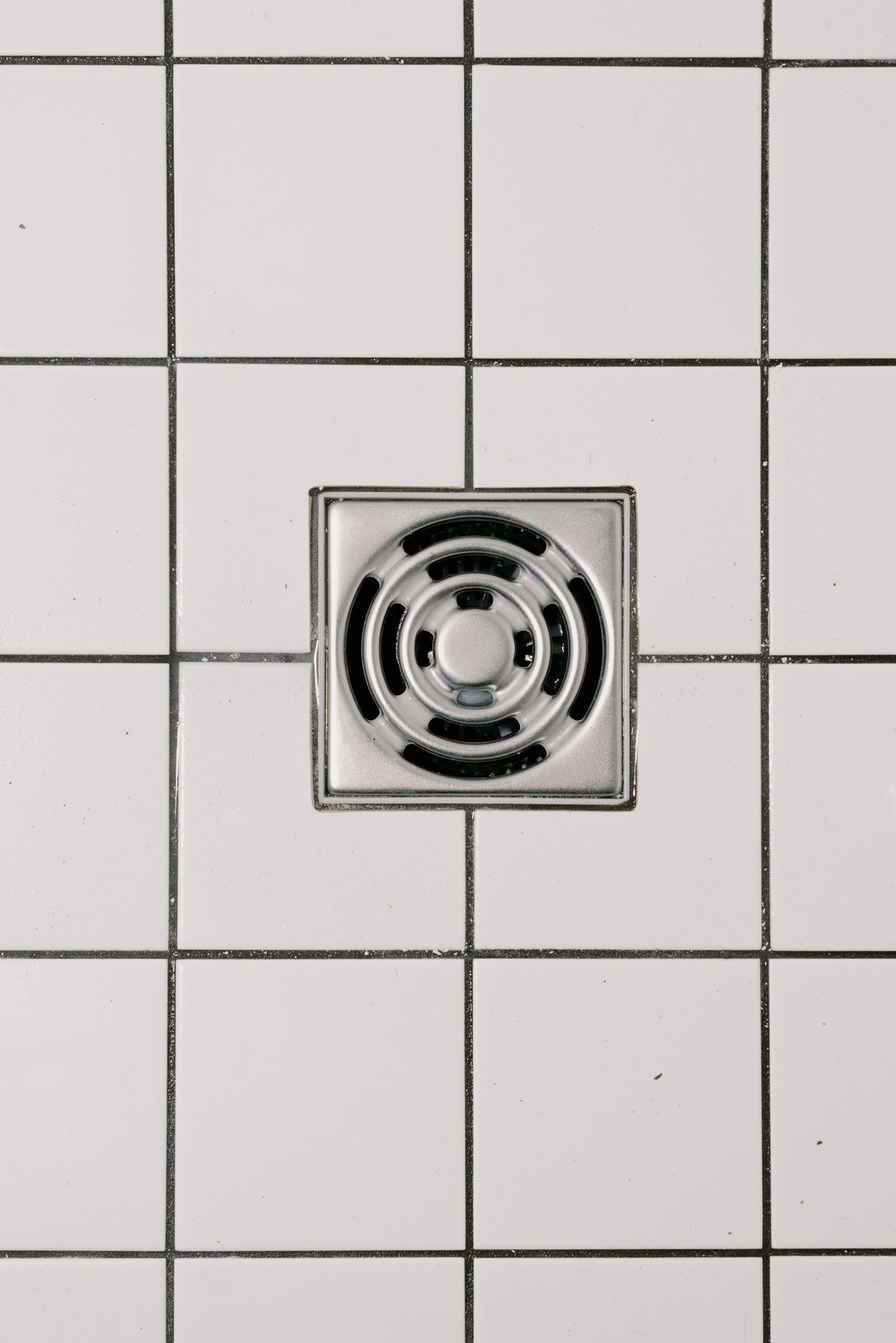
4. Flush a greasy kitchen drain. Pour a squirt of washing-up liquid down the drain, followed by a kettle of hot — not boiling — water. Boiling water can damage plastic pipework. This helps a mild grease coating only; it will not fix a solid grease plug or a cracked pipe.
5. Clean the trap under a slow, smelly sink. Put a bowl underneath, unscrew the U-bend trap by hand, empty it, and clear out debris. Refit it firmly and check for drips. If the trap is seized or cracked, stop — a leaking trap is worse than a smelly one.
6. Look, but do not fix, at the toilet base. Check whether the toilet rocks when pushed gently, or whether the floor around its base is damp or stained. A failed seal lets sewer gas out even when the toilet flushes normally. Do not try to reseal it yourself — a bad seal can leak sewage under the floor where you cannot see it.
7. Check the outside gully. If the smell is strongest outside, or several fixtures are affected, look at the outside gully from above. Leaves, silt and standing water there point to the outside run. WaterSafe’s guide to spotting an outside drain blockage makes the same inside-versus-outside distinction. Never climb into a manhole or inspection chamber to look further.
8. Listen for gurgling. Run a tap in one room and listen at another drain. Gurgling when water is used elsewhere suggests a vent problem is siphoning water out of traps. That ends the safe checks — vent pipes need an engineer to find why.
When the smell means a sewer problem
A drain smell stops being a cleaning job when any of these are true:
- The smell stays after traps have been refilled and plugholes cleaned.
- Several fixtures smell at once, or the smell is in every room.
- Drains gurgle, run slowly, or back up when another fixture is used.
- Sewage is coming back up, or the ground outside is dipping, soggy, or constantly wet.
- The smell returns every time it rains, or after every heavy use of water.
These signs point past the trap and into the pipework: a blocked vent, a failed seal, or a cracked or collapsed section of pipe letting sewer gas out. A camera survey is how an engineer finds it — a small camera run down the pipe shows exactly where the break, root intrusion or displaced joint sits, so the repair is targeted instead of guessed. Where the fault is in the sewer line itself, that repair is a sewer line repair in Bradford, not another clean.
When to stop and call an engineer
Stop trying home methods and call if any of these are true:
- Sewage is backing up into a bath, shower, toilet, or onto the floor.
- The smell will not clear after the safe checks above, or it keeps coming back.
- Several fixtures are affected at once, or the outside gully or manhole is overflowing.
- You suspect a failed toilet seal, a blocked vent, or a cracked pipe.
- The smell is strong, constant, or accompanied by headaches, nausea or eye irritation — ventilate the room and leave it until it is checked.
If your drain smell needs more than the checks above — a camera survey, a seal or vent repair, or a fix for a cracked pipe — you can book a drainage service in Bradford with Plumber Bradford Pros. Call 01274 041977 and say which fixtures smell, whether drains gurgle or back up, and whether the smell is worse after rain. And if you smell gas at any point, that is a different emergency: call the National Gas Emergency number, 0800 111 999, first.
Whose drain is it — yours, or Yorkshire Water’s?
Before paying anyone, it is worth knowing who owns the smelly section. Yorkshire Water’s pipework responsibility guide sets it out plainly:
| Pipe | Who is responsible |
|---|---|
| Private drain serving only your home, inside your property boundary | You, as the homeowner |
| Shared drain or sewer serving more than one home, or any drain outside your boundary | Usually Yorkshire Water, even if it runs under your garden |
| Drain in a rented home | Normally the landlord — check your tenancy agreement first |
What does fixing a smelly drain cost?
These are UK guide averages from Checkatrade’s CCTV drain survey cost guide (last updated October 2026) — national averages to budget by, not this business’s prices:
| Job | UK guide average | Typical range |
|---|---|---|
| Basic CCTV drain survey | £160 | £85–£235 |
| CCTV survey with full report | £275 | £200–£350 |
| CCTV survey, large property | £400 | £350–£450 |
| Drain jetting (if a blockage is also cleared) | £185 | £120–£250 |
What moves the price: how deep the fault sits, how easy the drain is to reach, whether a report and footage are included, and whether it is an emergency call-out. A simple trap or plughole clean costs far less than a survey — which is why the safe checks above come first. Before booking, check whether the call-out fee and VAT are included.
Why Bradford drains smell the way they do
Bradford’s housing gives drains a hard life. Older terraces and back-to-backs often still run on clay pipes laid decades ago, with joints that tree roots can enter and sections that sag over time. Many homes share drains with neighbours, so a fault in a shared run can smell in more than one house — and who pays is settled by where the fault sits, not by who noticed it first.
Student and landlord homes add the dry-trap pattern: a spare bathroom unused for weeks dries out, and the first person back meets a sewage smell that clears with 30 seconds of running water. The same smell in a bathroom used every day usually means build-up, a failing seal, or a vent fault.
How to stop drains smelling again
- Run water in rarely used fixtures once a week. Thirty seconds per fixture keeps every trap sealed.
- Fit strainers on plugholes. A cheap strainer catches hair and food before they reach the trap and start to rot.
- Never pour fat, oil, or grease down the sink. Let it cool, scrape it into the bin, and wipe the pan before washing up.
- Only flush paper down the toilet. Wipes — even ones labelled flushable — sanitary products, and nappies belong in the bin.
- Clear gully grates in autumn. Sweep leaves away from outside drains before they wash in and pack down.
- Book a camera survey for any smell that keeps returning. Clearing or masking the same drain twice without finding the cause is money spent on a symptom. If the same drain also blocks, read our blocked drain guide first — the two problems often share one cause.
FAQs
Why do my drains smell after a holiday?
Because the water in the traps has evaporated while you were away. A trap is a U-bend that holds water to block sewer gas. Run water in every fixture for 30 seconds to refill it, and the smell should fade within a day.
Is a smelly drain dangerous?
A single dry trap is usually just unpleasant. A strong, constant sewage smell, or one accompanied by headaches, nausea or eye irritation, should not be ignored — ventilate the room, leave it, and call an engineer. Sewer gas in high concentrations can irritate eyes and airways.
Will baking soda and vinegar fix a smelly drain?
They can freshen a mildly dirty plughole, but they do not fix a dry trap, a failed seal, a blocked vent, or a cracked pipe. If the smell returns after cleaning, the cause is deeper than surface build-up.
Why does the smell get worse when it rains?
Rain raises the water level in shared drains and sewers and changes the pressure in the system. If a vent is blocked or a seal has failed, that pressure pushes sewer gas back through the weakest trap — which is why a rain-linked smell points to a vent or seal fault, not a dirty plughole.
Who pays if the smelly drain is shared with my neighbours?
Usually Yorkshire Water. A drain serving more than one home, or any drain outside your property boundary, is generally the water company’s responsibility — even if it runs under your garden. A drain serving only your home inside your boundary is yours.
Smelly drain that will not clear? Call Plumber Bradford Pros on 01274 041977 — we are at 164 Dyson Street, Bradford BD9 4DE, and knowing which fixtures smell and whether drains gurgle or back up will point the visit the right way.