Quick answer: A radiator that is hot at the top but cold at the bottom almost always has sludge in it — a heavy mix of rust and debris that sinks and settles in the base, blocking the hot water from reaching it. Bleeding the radiator will not fix this: bleeding only releases trapped air, which collects at the top. A cold bottom needs the radiator flushed out, or a full power flush if several radiators are affected. A power flush typically costs £350–£800 as a UK guide average (Checkatrade, June 2026).
It is the classic October problem. The heating goes on for the first time in months — and one radiator, or several, stays cold along its bottom edge while the top gets hot. Where the cold patch sits tells you the cause, and the cause decides the fix.
Which of these sounds like your radiator?
- Hot at the top, cold at the bottom — the sludge pattern this guide covers.
- Cold at the top, hot at the bottom — trapped air, the opposite problem. Bleed the radiator.
- One radiator completely cold while the rest heat up — usually a stuck valve or airlock in that radiator, not sludge.
- Several radiators slow, or the furthest from the boiler worst — system-wide sludge or a circulation problem; likely power-flush territory.
Why is my radiator cold at the bottom?
Inside every steel radiator and most pipework, water and metal are in constant contact. Over time the metal corrodes and sheds tiny particles of iron oxide — rust. Mixed with debris, this forms a black, gritty sludge called magnetite. Heavier than water, it sinks and settles in the lowest part of every radiator — which is why the top still gets hot while the bottom stays cold. Viessmann’s radiator advice describes the same mechanism: metal breaking down through constant contact with oxygen and water, the rust carried around the system until it settles.
Left alone, a small blockage becomes a large one: the boiler works harder, rooms stay cold, and sludge keeps circulating through the pump and heat exchanger, wearing them out faster.
Cold at the top vs cold at the bottom — a 10-second diagnosis
Run the heating for 20 minutes, then carefully feel each radiator from top to bottom with the back of your hand. Match what you feel to the table.
| What you feel | Likely cause | The fix |
|---|---|---|
| Hot top, cold bottom | Sludge settled in the base | Flush the radiator, or power flush the system |
| Hot bottom, cold top | Trapped air | Bleed the radiator |
| Cold middle band, warm edges | Partial blockage or debris | Flush the radiator |
| Completely cold | Closed or stuck valve, or no flow at all | Check the valves, then circulation |
The rule: air rises, sludge sinks. Cold at the top means air — bleed it. Cold at the bottom means sludge — flushing is the fix.
What causes a cold bottom: the causes in order
| Cause | What you will notice | Safe to check yourself, or engineer job |
|---|---|---|
| Sludge and magnetite — internal corrosion settling in the base | Bottom edge cold on one or more radiators; black water when you bleed; boiler may kettle or rumble | You can diagnose it (see the checks below); clearing it is engineer work |
| Stuck TRV or closed lockshield valve — flow throttled before it reaches the radiator | Radiator slow or patchy; often after decorating; one radiator worse than the rest | Safe to check yourself — valve checks below |
| Weak circulation or an unbalanced system — water not moving through fast enough | Radiators furthest from the boiler worst; system slow to warm up; a clean or new radiator still cold at the bottom | Engineer — pump and balancing work |
| Low system pressure — radiators furthest from the boiler struggle first | Boiler gauge below 1 bar when cold; pressure drops repeatedly | You can check the gauge and top up once — our guide to why your boiler is losing pressure walks through it |
| Limescale — hard-water deposits adding to the blockage | Same cold-bottom pattern, in hard-water areas | Rarely the main cause in Bradford — see below |
Safe checks you can do yourself, in order
Do these in order. None of them involves opening the boiler or draining the system.
1. Map the cold patch. With the heating on for 20 minutes, feel each radiator top to bottom. Is it one radiator or several — and are the worst ones furthest from the boiler? One cold-bottom radiator usually means local sludge in that panel; several mean system-wide sludge; furthest-first suggests circulation or pressure.
2. Check both valves. Every radiator has a TRV you turn by hand and a lockshield under a small cap at the other end. Turn the TRV up and give it time, and check the lockshield has not been left nearly closed — a common find after decorating. A throttled valve starves the radiator of flow and mimics sludge, and it costs nothing to rule out.
3. Check whether the TRV pin is stuck. Pull the TRV head off to reveal a small raised pin. Press it — it should push down and spring back up. If it is stuck down or barely moves, that is very likely your problem. Try gently working it free, but do not force it. A seized TRV is one of the most common causes of a single cold radiator, and a far cheaper fix than a flush.
4. Bleed once, to rule air out. With the heating off and the radiator cool, open the bleed valve with a radiator key until water runs steadily, then close it. If the bottom stays cold, you have confirmed it is not air. Five minutes settles the air-vs-sludge question for certain. The Energy Saving Trust’s cold-weather tips recommend bleeding radiators regularly and keeping them unblocked so heat circulates freely.
5. Check the boiler pressure. Read the gauge when the system is cold — it should sit between 1 and 1.5 bar. Well below 1 bar and the radiators furthest from the boiler can struggle, mimicking other faults. Top up once if needed, following your boiler manual.
6. Look at the bleed water. Clear or slightly discoloured is normal; thick black water means sludge is circulating through the system — the visual confirmation that a flush is genuinely needed, not just suspected.
7. Try the magnet test. Run a fridge magnet along the cold strip at the bottom. If it grips firmly, there is magnetite — iron-oxide sludge — behind that part of the panel. A free, instant confirmation of what the engineer will find.
How a single radiator gets flushed — and when the whole system needs it
If just one radiator is cold at the bottom and the rest heat well, the sludge is usually local to that panel. An engineer can isolate it, take it off the wall, and flush it through with a hose outside until the water runs clear — then refit it, reopen the valves as they were, top the pressure back up, and bleed it. A confident homeowner with isolating valves at both ends can do this as DIY; without isolation valves, or any doubt about draining and refilling, call an engineer — a botched refill can airlock the whole system.
If several radiators are cold at the bottom, the bleed water runs black, or the boiler is kettling, the sludge is system-wide and you need a power flush. A pumping machine pushes water and cleaning chemicals through every radiator and pipe run at high velocity, dislodging sludge and flushing it out through an outside drain, finishing with a neutraliser and a fresh dose of inhibitor. It typically takes a full day — up to two for a large house — and Checkatrade recommends it every five to six years.
Two honest warnings: on a very old system a flush can reveal weak joints or pinhole leaks the sludge was sealing — budget for possible small repairs; and get a written quote stating what is included, as chemicals, inhibitor and filter are sometimes extras.
What does a power flush cost?
These are UK guide averages from Checkatrade’s power flush cost guide (last updated June 2026) — national ballpark averages to budget by, not this business’s prices. Checkatrade puts the overall average at £350–£800, driven mainly by the number of radiators:
| Property size | Radiators | UK guide average (ex VAT) | Typical duration |
|---|---|---|---|
| 2-bedroom flat | 4 | £350 | 1 day |
| 2-bedroom house | 6 | £450 | 1 day |
| 3-bedroom flat | 8 | £450 | 1 day |
| 3-bedroom house | 10 | £550 | 1 day |
| 4-bedroom flat | 11 | £600 | 1–2 days |
| 4-bedroom house | 15 | £800 | 1–2 days |
Price moves with radiator count, contamination level and region — London and the South East skew higher. Get three written quotes, and check whether inhibitor and filter are included.
When to stop and call an engineer
Call a heating engineer rather than going further yourself if several radiators are cold at the bottom, the bleed water runs black, the boiler is kettling or locking out, you can see rust patches or pinhole leaks, a radiator has no isolation valves, or the boiler is still under warranty.
The safety line: valves, bleeding and pressure top-ups are homeowner jobs. Anything involving the boiler itself, the sealed circuit, the pump or the gas supply is engineer work — and on a gas appliance, gas work is Gas Safe registered engineer work by law. Never open the boiler casing. Smell gas? Call the National Gas Emergency number, 0800 111 999, first.
If your radiators need more than the checks above — a proper diagnosis, a single-radiator flush, or a full power flush — you can book a central heating service in Bradford with Plumber Bradford Pros. Call 01274 041977 and say how many radiators are affected and what colour the bleed water was.
Why Bradford homes get this sooner
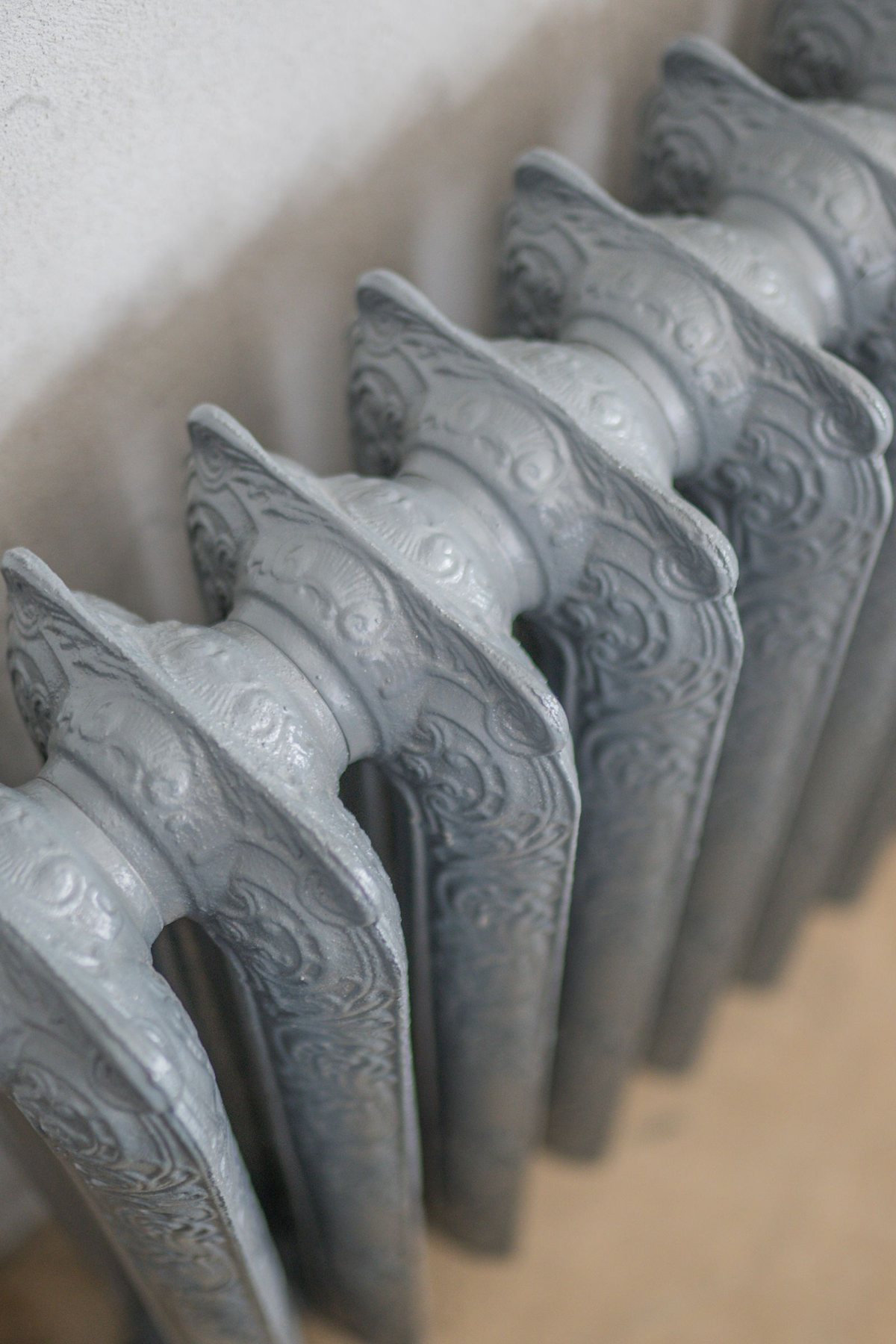
Bradford’s housing stock is hard on heating systems. Older terraces and back-to-backs still run steel panel and cast-iron radiators that have been in place for decades, and every year of internal corrosion adds to the sludge in their bases. Boilers in cellars and kitchen extensions sit in colder, damper spaces where corrosion shows up earlier, and in rented and student homes nobody is sure when the system was last dosed with inhibitor.
Bradford’s mains water is generally soft, so limescale is rarely the main culprit here the way it is in hard-water regions. When a Bradford radiator goes cold at the bottom, it is corrosion sludge far more often than scale — exactly what a flush and a fresh inhibitor dose deal with.
How to stop sludge coming back
- Keep inhibitor in the system. It slows internal corrosion. Have its level checked at the annual boiler service in Bradford, and re-dose after any drain-down or radiator swap — topping up dilutes it.
- Fit a magnetic filter. It sits on the return pipe and captures magnetite before it settles. Best fitted after a flush, not instead of one; fitting involves the sealed circuit, so it is an engineer job.
- Bleed radiators at the start of each heating season, then re-check the pressure.
- Do not keep topping up blindly. Every top-up adds fresh, oxygen-rich water that feeds corrosion — find out why the pressure keeps dropping instead.
FAQs
Will bleeding my radiator fix it being cold at the bottom?
No. Bleeding only releases trapped air, which collects at the top. A cold bottom is usually sludge in the base, and bleeding does nothing for it — the radiator needs flushing instead. Bleeding is the fix for the opposite symptom: cold at the top.
Can I flush one radiator myself?
Yes, if it has isolating valves at both ends and you are confident: turn the heating off, close both valves (count the lockshield turns so you can reopen it the same amount), remove the radiator, flush it with a garden hose until the water runs clear, then rehang, repressurise and bleed. No isolation valves, or any doubt — call an engineer.
How much does a power flush cost?
As a UK guide average, £350–£800 (Checkatrade, June 2026), depending on radiator count — roughly £350 for a 2-bedroom flat with 4 radiators, up to £800 for a 4-bedroom house with 15. Always get a written quote for your own system.
Can a power flush damage an old heating system?
It can reveal existing weaknesses: on a very old system, the high-velocity flush can expose weak joints or pinhole leaks that sludge was quietly sealing. Have the system assessed first — and go in knowing a small repair bill is possible.
Why is my new or recently flushed radiator cold at the bottom?
If the panel is clean, it usually is not sludge. A new or freshly flushed radiator that is cold at the bottom most often points to a circulation problem — a weak pump or a system that needs balancing so each radiator gets enough flow.
Radiator still cold along the bottom? Call Plumber Bradford Pros on 01274 041977 — we are at 164 Dyson Street, Bradford BD9 4DE, and knowing how many radiators are affected and what the bleed water looked like will point the visit the right way.