A dishwasher usually leaks because the door seal has worn, the filter was not refitted properly, or a hose under the sink has worked loose. Standing water is usually a blocked filter or a kinked or blocked waste hose. Switch the machine off at the socket, mop up, and do not run another cycle until you know where the water is coming from. A little clean water in the tub is normal. This guide shows how to tell a leak from a drainage fault, the safe checks in order, and UK guide repair costs from Checkatrade, updated in November 2026.
Find your situation first
- Water on the floor: go to what is causing it?
- Water left in the bottom: go to what is causing it?
- The sink is slow too: go to is it the dishwasher or the sink?
- Just cleaned the filter: go to safe checks, in order.
- Costs: go to what does it cost?
- When to stop: go to when to stop and call.
Is it the dishwasher or the sink?
First, find out whether the fault is in the machine or the shared waste pipe: a UK dishwasher usually drains through the same waste run as the kitchen sink, so a blockage further down shows up in both.
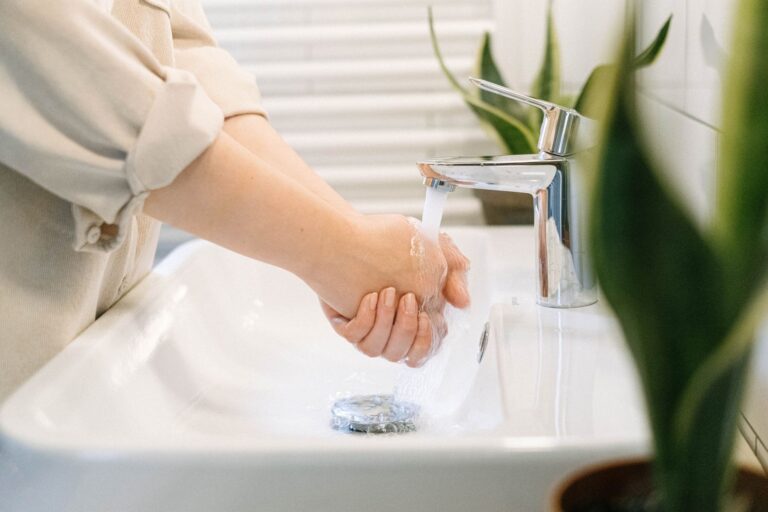
Run the kitchen tap for thirty seconds. If the sink drains freely but the dishwasher still holds water, the fault is in the dishwasher: its filter, waste hose, or pump. If the sink is slow, or water rises in it when the dishwasher drains, the blockage is in the shared waste pipe.
The two faults need different fixes: a blocked sink waste is a drainage job, while a dishwasher that will not drain is an appliance fault. Our guide to a kitchen sink that keeps blocking again and again explains how grease builds up further down the pipe.
One more check: look under the sink at the waste hose. It should rise in a loop before it drops to the waste connection, so dirty water cannot flow back into the dishwasher. WaterSafe’s advice on common plumbing problems includes checking that dishwashers and washing machines are correctly installed to avoid backflow.
What is causing it?
Leaks and standing water look different but share most causes. Find your symptom in the table, then work through the safe checks.
| Cause | What you will notice | Safe to check yourself, or plumber job |
|---|---|---|
| Worn or split door seal | Water drips from the bottom of the door; the seal feels hard or cracked | Safe check: wipe it and look for splits. Replacing it is a repair visit |
| Door dropped on worn hinges (integrated dishwasher) | Water leaks from one corner; the door sits lower on one side | Repair visit: hinge and spring work needs the machine pulled out |
| Filter not refitted properly after cleaning | Water leaks from under the machine, or the tub does not drain, just after cleaning | Safe check: take it out and refit it until it locks |
| Blocked filter or sump | Standing water in the tub; food and grit in the filter; the cycle ends early | Safe check: clean the filter and the sump by hand |
| Kinked or blocked waste hose | Standing water in the tub; the sink still drains fine | Safe check: look for kinks under the sink. Moving the machine is a repair visit |
| Blocked sink waste connection | The sink is slow too, or water rises in it when the dishwasher drains | Plumber job: the blockage is in the shared waste pipe, not the machine |
| Loose or split inlet hose | Water appears at the back of the machine, or only while it is filling | Safe check: look for drips at the connections. A split hose is a repair visit |
| Too much detergent, or washing-up liquid used by mistake | Foam spills from the door or the vents; the machine stops mid-cycle | Safe check: scoop the foam out and run a rinse with no detergent |
| Drain pump or float switch failed | Standing water and silence where the pump used to hum, or the machine overfills | Repair visit: both parts sit inside the machine |
| Machine not level | Water pools on one side of the tub | Safe check: push it gently and see if it rocks |
Two points are worth knowing. Beko’s own support page names a clogged or twisted drain hose and a clogged pump filter as the causes of a leaking dishwasher, and says not to try to repair it yourself. A small cupful of clean water in the sump is normal: it keeps the pump seal wet. Standing water above the filter is not normal.
Safe checks, in order
Work through these in order. Stop at any step where you find water near a socket.
- Switch the machine off at the socket and mop up. Do not touch a socket or plug while standing in water; if water is near a socket, switch the electricity off at the consumer unit first. Do not run another cycle to force a drain: it will only push more water out.
- Check what went into the machine. Washing-up liquid instead of dishwasher detergent, or far too much detergent, means foam is the cause. Scoop it out, wipe the door and seal, then run a short rinse with no detergent. Never put washing-up liquid in a dishwasher: it foams far more than dishwasher detergent.
- Look at the door seal. Run a finger along the rubber seal, wipe away food and grit, and look for splits or a seal pulled away from its groove. A dirty seal can leak; a split seal needs replacing.
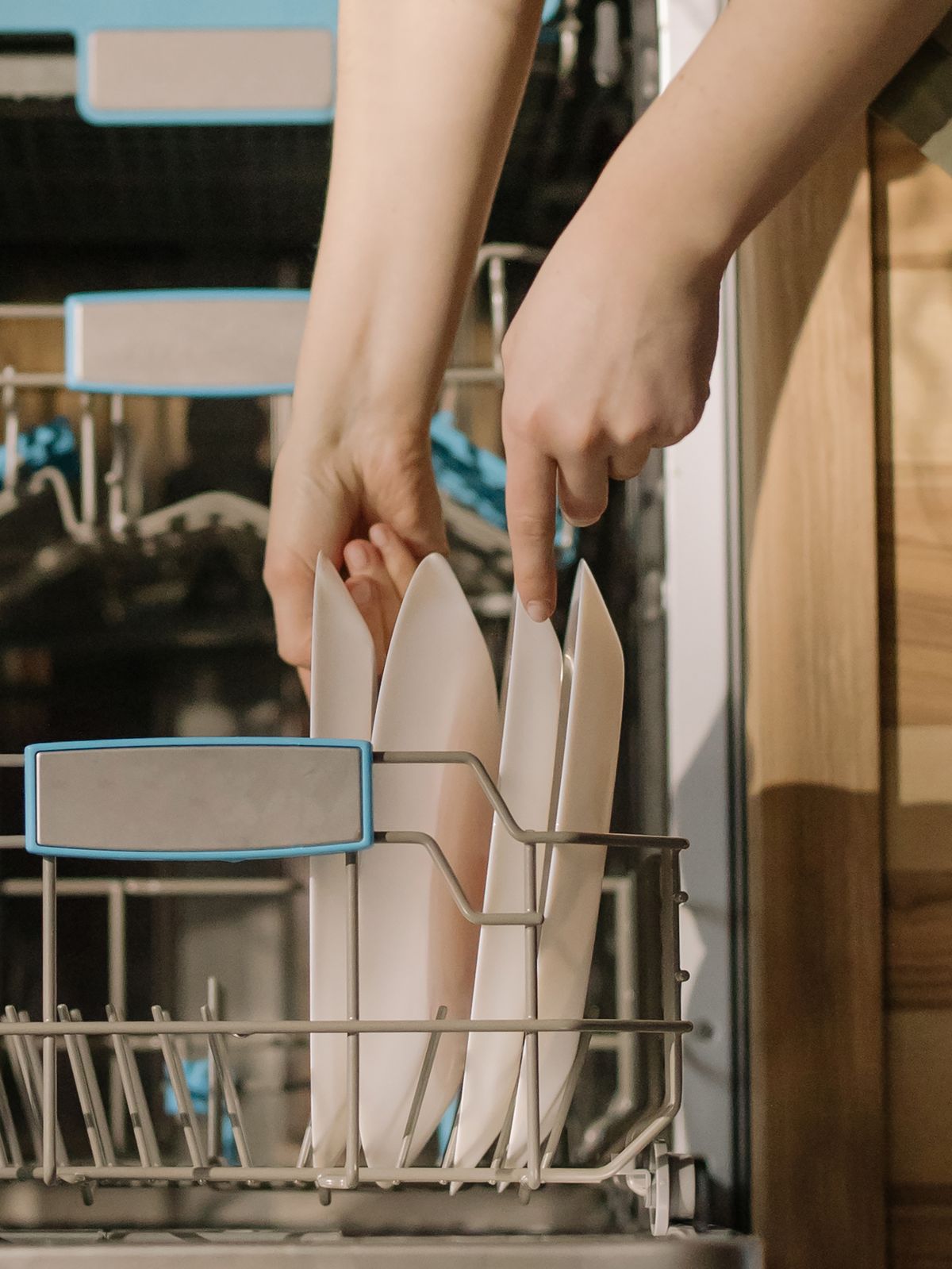
- Take the filter out, clean it, and refit it properly. Twist the filter at the bottom of the tub anticlockwise and lift it out with the mesh around it. Rinse both under the tap and pick out food and grit. Put them back and twist until the filter locks: a loose filter lets food into the pump.
- Look at the waste hose under the sink. Follow it to the waste connection and look for a kink, a squash, or a connection that has worked loose. Check the hose still rises in a loop before it drops to the waste. Do not pull the machine out to see the hose behind it: it is heavy, and pulling it can tear a hose that is already loose.
- Run the sink test. Run the kitchen tap for thirty seconds: if the sink drains slowly, the blockage is in the shared waste pipe, not the dishwasher. If it drains freely, the fault is in the machine.
- Scoop the standing water out and run a rinse. Scoop the water from the tub with a jug, then run the shortest rinse cycle. If it fills, washes, and drains cleanly, the blockage was in the filter or the hose. If the water stays, or the machine hums without draining, stop: the pump or float switch needs a repair visit.
- Check whether the machine is level. Push the top corners gently: if it rocks, a tilted tub leaves water on one side and stops the door sealing evenly. Levelling a freestanding machine means turning its feet; levelling a built-in one means pulling it out, so leave that to a repair visit.
Never remove a panel or open the machine casing: the pump, float switch, heating element, and wiring all sit inside, and water and electricity do not mix. Never use chemical drain cleaner in a dishwasher: it damages the seals and the pump and leaves chemicals on the dishes. Gas work is for a Gas Safe registered engineer only; if you smell gas, leave the property and call the National Gas Emergency Service on 0800 111 999.
When to stop and call
Call a plumber if water is coming out faster than you can mop it up; if the leak is from the back of the machine or inside the casing; if the machine hums but will not drain after the filter and hose checks; if the float switch or pump has failed; if the door has dropped on worn hinges; or if the sink and dishwasher back up together. A leak that keeps coming back after the filter has been cleaned is not a cleaning problem.
If the sink and dishwasher back up together, it is a drainage problem, not an appliance problem, and our drainage service in Bradford covers what that involves. For the dishwasher itself, call a kitchen plumbing in Bradford visit and say whether the machine is leaking or holding water, and what the checks showed. You can also call Plumber Bradford Pros on 01274 041977. Say if the water is near a socket.
What does it cost?
Every figure below is a UK guide average from Checkatrade’s dishwasher repair cost guide, last updated in November 2026 — guide averages, not this business’s prices.
| Job (supply and fit, where stated) | UK guide average range | Average |
|---|---|---|
| Call-out and diagnosis | £65 to £150 | £105 |
| Blocked filter, cleared | £50 to £150 | £100 |
| New door seal | £70 to £100 | £85 |
| New drain pump | £120 to £160 | £140 |
| New motor | — | £255 |
| New heating element | — | £240 |
| New control board | — | £300 |
The cheapest fixes are in the safe checks above: a cleaned and refitted filter costs nothing, and a new door seal is one of the lowest-priced repairs. The price rises sharply when the fault is inside the machine: a pump, motor, heating element, or control board needs the machine opened up, and the part costs more than the labour. The full breakdown is in Checkatrade’s dishwasher repair cost guide.
Checkatrade’s guide also gives the repair-or-replace rule: over eight years old, it is usually better to replace the machine than pay for a major repair. A new door seal or a cleared filter is worth doing at any age; a new control board on a ten-year-old machine usually is not.
Why this matters more in Bradford homes
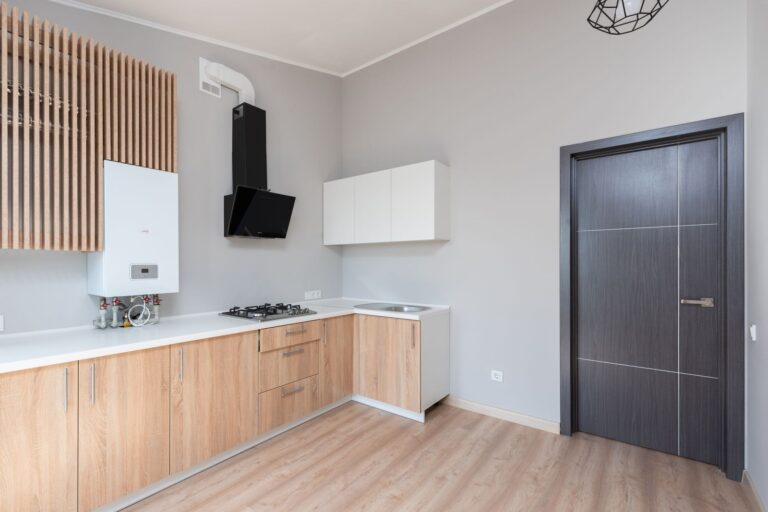
Much of Bradford is Victorian and Edwardian terraces, and the kitchens in those houses are small. The dishwasher usually sits in a tight run of units, sharing one waste pipe with the sink, and the hose runs a long way under it. A kink is easy to cause and hard to see, because the space under the sink is full of cleaning products. In a fitted kitchen with an integrated dishwasher, a slow leak can sit behind the plinth for weeks before anyone notices, and by then the floor underneath is soaked.
Flats are the other Bradford case. A leak in an upstairs flat drips into the ceiling below, so tell the neighbour below as soon as you find it, and your landlord if you rent. In student and landlord homes, the filter is often never cleaned, because nobody knows it twists out. A filter full of food is the most common cause of standing water, and the easiest to prevent.
Prevention: keep it draining freely
- Clean the filter every two weeks. Twist it out, rinse it, refit it until it locks.
- Scrape plates before loading. Food goes in the bin, not the filter; grease goes in a jar, not down the sink.
- Use dishwasher detergent only. Never washing-up liquid, and never more than the dose.
- Run a hot empty cycle once a month. It clears grease from the filter, sump and waste hose.
- Keep the space under the sink clear around the hose. Nothing heavy should press against it.
Frequently asked questions
Is a little water in the bottom of my dishwasher normal? A small cupful of clean water in the sump is normal: it keeps the pump seal wet. Standing water above the filter, or dirty water, is not normal.
Why is my dishwasher leaking from the bottom of the door? The door seal is the most common cause: it wears, splits, or traps food. Wipe it and check for splits. If it looks fine, check the filter is locked down.
Can I use washing-up liquid in my dishwasher? No. Washing-up liquid foams far more than dishwasher detergent. Scoop the foam out and run a rinse with no detergent.
Why does my dishwasher leave standing water after a cycle? The filter is blocked, the waste hose is kinked or blocked, or the pump has failed. Clean and refit the filter first, then check the hose under the sink. If the sink is slow too, the blockage is in the shared waste pipe.
Should I run another cycle to force it to drain? No. It only pushes more water into a machine that is already not draining. Scoop the water out, run the safe checks, and if it still will not drain, call for a repair.
When is it better to replace a dishwasher than repair it? As a UK guide average from Checkatrade, last updated in November 2026, a new door seal costs about £85 and a new drain pump about £140, but a new control board costs about £300. Over eight years old, replace the machine rather than pay for a major repair.
Plumber Bradford Pros, 164 Dyson Street, Bradford BD9 4DE. Call 01274 041977 if your dishwasher is leaking, will not drain, or keeps leaving standing water after the filter has been cleaned.