Quick answer: If you let a property in Bradford with gas appliances you provide, you must have every gas appliance and flue checked for safety every 12 months by a Gas Safe registered engineer. The engineer issues a Landlord Gas Safety Record, still widely called a CP12. You must give existing tenants a copy within 28 days, give new tenants a copy before they move in, and keep your own copy for at least two years. A CP12 costs £60–£90 as a UK guide average (Checkatrade, October 2026). Missing the check is a criminal offence, and only a Gas Safe registered engineer can carry it out.
This guide covers what the law requires, what the check does and does not include, the deadlines that catch landlords out, what happens if a tenant will not allow access, and what it costs.
Which landlord situation are you in?
- First let, or a new tenancy about to start — check done within the last 12 months, copy to the new tenant before move-in.
- Renewing a check — book up to two months early and keep your original renewal date.
- Letting through an agent — your contract must say who arranges the check. If silent, the duty stays with you.
- Tenant will not allow access — you cannot force entry. Show all reasonable steps, in writing.
- Adding a new gas appliance mid-tenancy — it gets its own 12-month clock from installation.
What is a CP12, exactly?
CP12 was the form number used when CORGI ran the gas register. The official document is now the Landlord Gas Safety Record: dated proof that, on one day, a Gas Safe registered engineer inspected the appliances and flues you provide and recorded each result.
It is not a pass that lasts forever, and it is not a service. A service cleans, adjusts and maintains an appliance. A safety check tests whether appliances and flues are safe at the time of the visit. A CP12 alone does not mean the boiler has been serviced.
The duty comes from the Gas Safety (Installation and Use) Regulations 1998. It applies to landlords letting residential property under a lease of less than seven years, or under a licence, including private landlords, housing associations, hostels, bed-sit rooms and rented holiday lets. A lease of more than seven years that is also for life is treated differently.
What the check covers — and what it does not
The engineer checks every gas appliance and flue you provide for tenants’ use, plus its pipework: usually the boiler, any gas fire, and any gas hob or cooker you provided. Communal appliances and flues tenants may use are included too.
| Covered by your duty | Not covered in the same way | What to do instead |
|---|---|---|
| Boiler, gas fire, gas hob or cooker you provided | A gas appliance the tenant owns | You are still responsible for its pipework, not the appliance. Remind the tenant, in writing, to have it checked yearly. |
| Flues and chimneys serving your appliances | A flue serving only a tenant’s own appliance | Good practice is to include all such flues in the check. |
| Gas pipework you provide | An appliance in a part of the property used only for non-residential purposes | The landlord check does not apply to that part, but other duties may. |
| LPG appliances you provide | An appliance left behind by a previous tenant that you decide to keep | Once you keep it, treat it as yours and include it annually. |
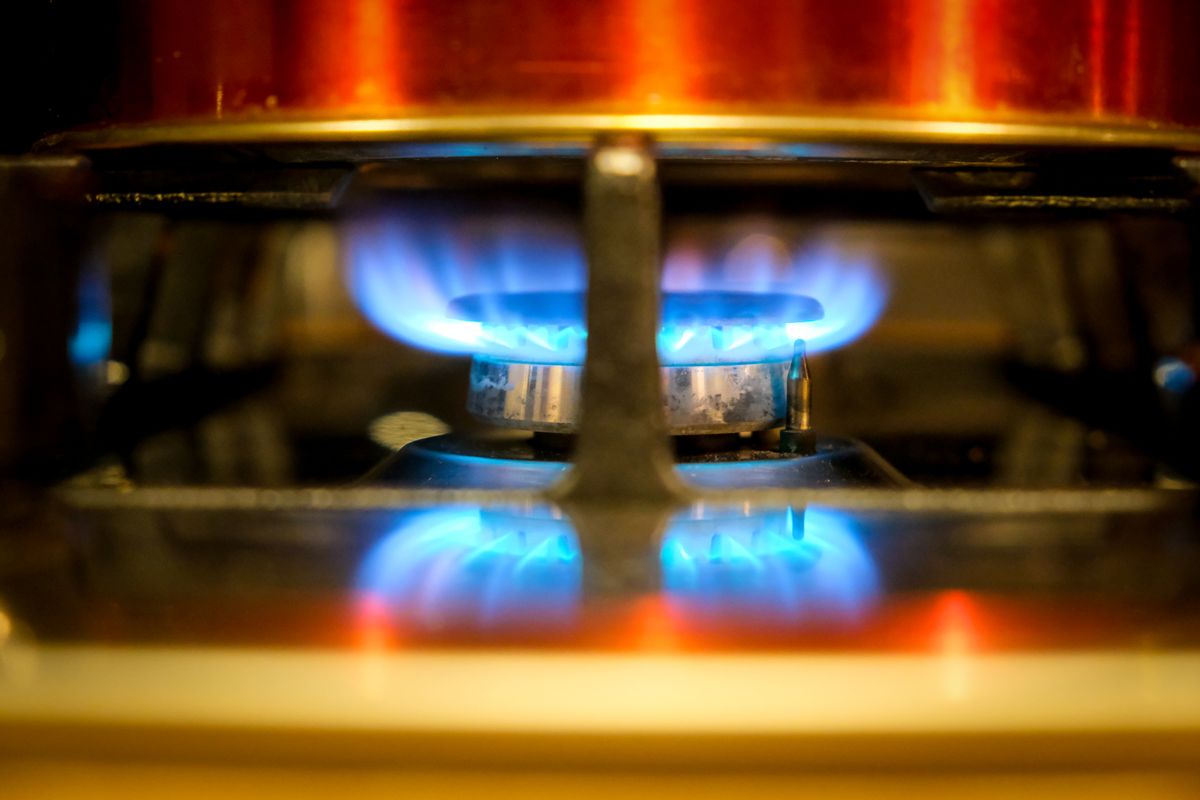
On the visit, the engineer inspects each appliance, checks flues and ventilation, tests that appliances burn gas correctly and safety devices work, and looks for leaks or carbon monoxide risks. Anything found is recorded, with the action taken or advised. If a defect needs repair, that repair is separate, and the record should still be issued when the check is done, not held back until repair.
What the engineer finds: the three defect labels
Not every finding means the same thing. Knowing the labels helps you act in the right order.
| Label | What it means | What happens next |
|---|---|---|
| Immediately Dangerous (ID) | A direct danger, for example a gas leak or dangerous carbon monoxide spillage. | The engineer will make it safe, usually by turning it off and disconnecting it. Do not switch it back on until a Gas Safe registered engineer has repaired and rechecked it. |
| At Risk (AR) | A fault could become dangerous, or safety cannot be confirmed. | Do not use it until the fault is fixed and checked. |
| Not to Current Standards (NCS) | Safe as it stands, but not to today’s standards. | No immediate danger, but plan the improvement at the next service visit. |
Never open a boiler casing yourself, and never let an unregistered person work on gas. Gas work must be carried out by a Gas Safe registered engineer only. Check any engineer on the Gas Safe Register before booking. If you smell gas, leave the property if it is safe to do so, do not switch lights or appliances on or off, and call the National Gas Emergency line on 0800 111 999.
The deadlines landlords miss
Most CP12 problems are diary problems. The dates matter as much as the visit itself.
| Rule | Deadline | Common mistake |
|---|---|---|
| Annual check, every appliance and flue | Within 12 months of installation, then every 12 months | Assuming one property date covers a new appliance. Each new appliance has its own clock. |
| Early renewal | Up to two months early, keeping the original renewal date | Leaving renewal to the last week, then missing it when the tenant is away. |
| Copy to existing tenants | Within 28 days of the check | Getting the check done and forgetting the copy. That alone is still a breach. |
| Copy to new tenants | Before they move in | Handing over keys first and sending the record later. |
| Keep your own records | At least two years, until two further checks are done | Losing records at a change of agent, or keeping them only on one phone. |
There is one one-off flexibility. Under the 2018 amendment, a new appliance’s first check date can be realigned once with the property’s existing annual date, extending the gap by up to two months. Electronic copies are acceptable, as long as they can be printed when needed and are stored securely.
What a CP12 costs in the UK
Every price here is a UK guide average, not a price charged by this business. Get a written quote before booking.
| Item | UK guide average | Source |
|---|---|---|
| Gas safety certificate (CP12), typically boiler plus one other appliance | £60–£90, average £80 | Checkatrade, October 2026 |
| Each additional appliance | Around £10–£15 | Checkatrade, October 2026 |
| Boiler service, if booked at the same visit | £80–£120 | Checkatrade, March 2026 |
| Repairs found during the check | Separate, quoted on the day | Not included in the check fee |
Two cost points landlords often get wrong. First, you cannot charge tenants for the gas safety check. It is your legal duty and a normal cost of letting. Second, a combined check and service visit means one access arrangement instead of two. Ask for the check and the service to be priced as separate lines.
See the Checkatrade gas safety certificate cost guide and the HSE gas safety guidance for landlords.
If a tenant will not allow access
You must not force entry, and you must not simply give up until the next tenancy. The HSE expects repeated, documented attempts.
- Put access in the tenancy agreement. It should allow access for safety checks, with reasonable notice.
- Write, do not just call. Explain that the check is a legal requirement for their safety, and offer a choice of times.
- Leave a notice after a missed visit. State that an attempt was made, with your contact details.
- Try again, and keep every letter. The HSE looks for at least three attempts. Keep dated copies.
- Keep trying through other routes. If you use an agent, make sure the agent is trying too.
Documented refusal does not erase the duty, but a court will look at whether your steps were reasonable. Undocumented refusal is much harder to defend.
Agents, sublets and shared homes
Using a letting agent does not move the duty away unless the management contract clearly says the agent arranges the checks and keeps the records. If it does not say that, the duty remains yours. Ask to see the records every year, rather than assuming they exist.
If your tenant sublets the whole property, you are still responsible, and your contract with your tenant must clearly allocate who arranges the check. A tenant who simply shares the home with others in return for rent does not take on landlord duties under these regulations. In a house in multiple occupation, every gas appliance and flue you provide is still covered, and access is harder because more people live there.
Carbon monoxide alarms: the rule that sits alongside the CP12
Since 1 October 2022, landlords in England must fit a carbon monoxide alarm in any room used as living accommodation containing a fixed combustion appliance, other than a gas cooker. The alarm is not part of the CP12, but a missing alarm is a separate breach.
Test alarms regularly and replace them when the manufacturer says they expire. If an alarm sounds, or anyone has symptoms that ease outside, get everyone into fresh air and call 0800 111 999. Do not go back in to investigate it yourself.
Landlord gas safety in Bradford: what is different here
Much of Bradford’s rental stock is older. Back-to-back houses and Victorian terraces often have boilers in cellars, kitchen cupboards or lofts, with flues through older brickwork. Book a longer visit window and make sure the engineer can reach every appliance, the gas meter and the flue terminal.
Student lets and shared houses turn over tenants often, so the “copy before move-in” rule is tested several times a year. Keep a folder per property, with the current record and the two previous years, and hand it over in the move-in pack.
Many Bradford landlords let through local agents. That works when the contract names the agent for gas safety, and badly when nobody is sure. Before your next renewal, check one line of your contract: who arranges the annual check, and who keeps the record?
How to run the diary so you never miss a date
- Book the next check before the engineer leaves. Two months early costs nothing in renewal date.
- One date per appliance, not per property. Note a new hob or fire separately when installed.
- Send the tenant copy the same week. Email it, keep the sent copy, and note the date.
- Keep two years of records per property. Store them where a change of agent or phone cannot lose them.
- Combine the check with the service. One visit, one access arrangement. Our what a boiler service includes guide explains the difference.
When to stop and call
Book now if any of these apply, rather than waiting for the renewal date:
- Your current record has expired, or you cannot find a copy of it.
- A new tenancy is about to start and the last check is over 12 months old.
- An appliance labelled Immediately Dangerous or At Risk has not yet been repaired and rechecked.
- A carbon monoxide alarm has sounded, or you smell gas. Leave if safe and call 0800 111 999 first.
- You have bought a rented property and have not seen its gas safety records.
- Your agent cannot show you the current record, or your contract does not say who arranges it.
For a landlord check in Bradford, contact our gas plumber in Bradford team, or ask about a boiler service in Bradford at the same visit. Call 01274 041977 with the address, appliance count and last record date ready.
Frequently asked questions
Is a CP12 the same as a gas safety certificate?
Yes. CP12 was the old form number. The official document is the Landlord Gas Safety Record, issued after a Gas Safe registered engineer has checked the appliances and flues you provide.
How often does a landlord need a gas safety check?
Every 12 months, for every appliance and flue you provide. You can renew up to two months early without losing your original renewal date.
Does a gas safety check include a boiler service?
No. A safety check tests whether appliances and flues are safe at the time of the visit. A service cleans, adjusts and maintains the appliance. They are different jobs, often booked together.
Who gets a copy of the record, and when?
Existing tenants within 28 days of the check, and new tenants before they move in. Keep your own copy for at least two years.
Can I charge my tenants for the gas safety check?
No. The check is your legal duty, and its cost is a normal cost of letting.
What happens if my tenant will not allow access?
You must not force entry. Write to the tenant, offer alternative times, leave a notice after any missed visit, and keep dated copies of every attempt. The HSE looks for at least three documented attempts.
Plumber Bradford Pros, 164 Dyson Street, Bradford BD9 4DE. Call 01274 041977 to book a landlord gas safety check in Bradford.