A toilet that keeps running after you flush usually has a worn seal, a float set too high, or a fill valve that will not shut off. The 20-minute food-colouring test tells you which one it is: put a few drops of food colouring in the cistern, do not flush, and wait 20 minutes. If colour shows in the bowl, water is leaking past the flush valve seal. If the cistern overfills into the overflow pipe instead, the float or fill valve is the problem. Most fixes are small parts and about an hour of a plumber’s time: as a UK guide average, plumbers charge around £50 an hour (Checkatrade, October 2026).
Find your sign first
- Running water long after the flush has finished: something inside the cistern is not shutting off. Read the causes table.
- The toilet flushes itself every few minutes: water is leaking into the bowl, and the fill valve keeps topping it up. Do the food-colouring test.
- A thin trickle at the back of the bowl: the flush valve seal is letting water through. Read the safe checks.
- Water spilling into the overflow pipe: the level is set too high, or the fill valve will not close. Read the safe checks.
- A higher water bill with no other cause: a running toilet can waste 200 to 400 litres a day.
- Water on the bathroom floor, or a cracked cistern: turn the water off at the isolation valve and call a plumber now.
How a toilet cistern works
When you flush, the flush valve opens and water rushes from the cistern into the bowl. The valve then closes and seals, and the fill valve refills the cistern until the float rises and stops the water. A running toilet means one of those steps is not finishing: water keeps leaking out, or water keeps coming in because the fill valve never shuts off. Older UK toilets often use a syphon with a lever handle; newer ones use a drop valve with a push button. The fault-finding is the same either way.
What causes a toilet to keep running?
| Cause | What you will notice | Safe to check yourself, or engineer job |
|---|---|---|
| Worn or dirty flush valve seal (flapper) | A thin trickle at the back of the bowl; the toilet refills itself every few minutes; food colouring reaches the bowl without a flush | Safe checks below: clean the seal, or replace it if warped or brittle |
| Float set too high | Water spills into the overflow pipe | Safe checks below: lower the float to about 25 mm below the overflow pipe |
| Faulty fill valve | A constant hiss; the cistern keeps filling | Safe checks below: clean it; if it still will not shut off, replacement is a plumber job |
| Flush chain too long, too short, or tangled | The flush valve does not drop flat and seal after a flush | Safe checks below: adjust the chain so it has a little slack |
| Fill tube out of place | Water misses the overflow tube; the bowl does not refill properly | Safe checks below: push the tube firmly back into place |
| Worn flush valve seat | A new seal still leaks; limescale or grit on the rim | Call an engineer: the seat may need cleaning or the valve unit replacing |
| Cracked overflow tube or cracked cistern | Water on the floor, or a crack in the porcelain | Engineer job: turn the water off and call a plumber |
| Concealed cistern fault | The same running sound, but the cistern is hidden behind a wall or panel | Only the flush plate comes off: anything deeper is an engineer job |
The 20-minute food-colouring test
This test needs nothing more than food colouring from the kitchen cupboard. It is the test WaterSafe recommends for a leaky loo.
- Lift the cistern lid and look inside. The water should sit just below the overflow pipe. If it is already spilling in, the fault is on the fill side, so skip to the float check.
- Add a few drops of food colouring to the cistern water. Use a strong colour. Do not flush.
- Wait 20 minutes without using the toilet.
- Look at the water in the bowl. If colour has appeared in the bowl, water is leaking past the flush valve seal: it is worn, dirty, or not sitting flat.
- If the bowl water is still clear, the seal is holding. The fault is on the fill side: the float, the fill valve, or the water level.
WaterSafe’s guide to stopping water running in a toilet starts the same way: lift the lid, flush, and watch what the water does.
Safe checks you can do yourself
Before you remove or replace any part, turn the water off at the isolation valve behind or beside the toilet, then flush to empty the cistern.
- Check the water level. Flush and watch where the water settles. It should sit about 25 mm below the top of the overflow pipe. If it rises into the pipe, the float is set too high.
- Lower the float. On a modern fill valve, turn the small adjustment screw clockwise, or slide the float cup down the rod. On an older ball float, bend the arm gently downwards. Flush once: the valve should shut off cleanly before the water reaches the overflow pipe.
- Press the flush valve seal down. While the toilet is running, press the flapper or drop valve gently down. If the running stops, the seal is not sitting flat. Lift it out and check for warping or cracks. Wipe the seal and its rim with a damp cloth: limescale and grit often wedge underneath and hold it open.
- Check the chain. The chain between the flush handle and the flapper should have a little slack, about one or two links. Too short, and it holds the flapper open. Too long, and it can get caught under it when it closes.
- Check the fill tube. The small tube from the fill valve should sit above the overflow tube, aimed so water goes into it. Push it back if it has slipped.
- Listen for the fill valve. If you lower the float and the water keeps rising, or you hear a constant hiss, the fill valve is worn and will not shut off. A waterlogged float also cannot rise properly: take it off and shake it, and replace it if you hear water inside.
If the toilet stops running after one of these checks, flush twice and listen. If it holds through two full fill cycles, it is fixed. If it starts running again, the part is worn and needs replacing.
What you must not do
- Do not force a seized isolation valve. If the valve behind the toilet will not turn, do not force it with pliers: it can snap and flood the bathroom. Turn off the main stopcock instead. Our guide to a leaking or seized stopcock explains what to do next.
- Do not keep flushing a toilet that is overflowing. If water is spilling from the cistern or the bowl, stop flushing and turn the water off.
- Do not use a toilet with a cracked cistern. A crack in porcelain can spread without warning, so turn the water off and do not use it until it has been looked at.
- Do not take a concealed cistern apart beyond the flush plate. The frame and pipework behind the wall are not a DIY job.
- Do not touch any gas appliance or pipe while working in the bathroom. Gas work is for a Gas Safe registered engineer only. If you smell gas, call the National Gas Emergency Service on 0800 111 999.
Concealed cisterns and push-button toilets
Many newer Bradford homes and refurbished bathrooms have a concealed cistern behind a wall or tiled panel, with only the flush plate showing. The same faults happen inside, but you cannot lift a lid and look.
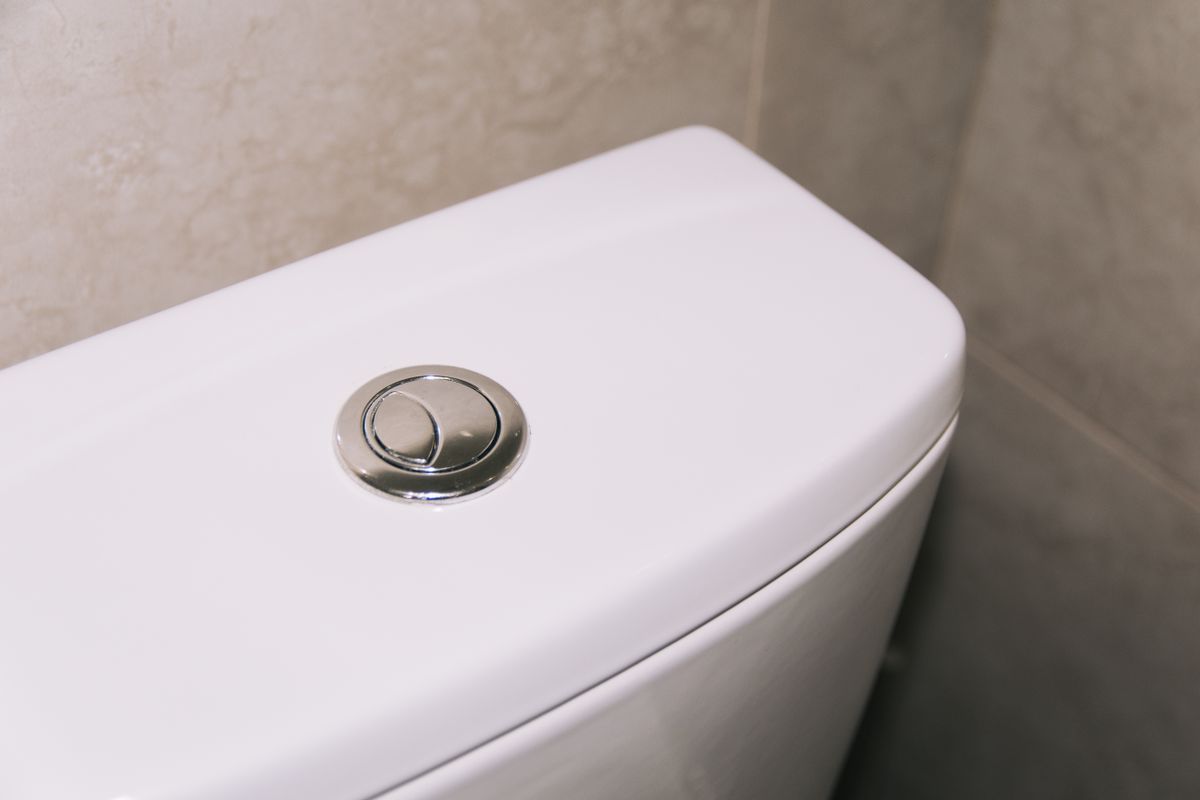
The flush plate usually lifts or unclips, giving access to the fill valve and the flush valve. You can check the water level and adjust the float through that opening. But if you cannot reach the part, or cannot see what is wrong, do not force the panel off: a plumber can work through the flush plate opening without damaging the tiling. Dual-flush push-button toilets have a drop valve instead of a flapper, with a flat rubber washer at its base: limescale and grit on that washer are the usual cause of a running push-button toilet, and wiping it clean often fixes it.
When to stop and call
Call a plumber if any of these apply: the test shows a leak and cleaning the seal does not fix it; lowering the float makes no difference; the fill valve hisses constantly; the isolation valve is seized; the cistern is cracked; water is on the floor; or the cistern is concealed and you cannot reach the faulty part.
For a bathroom plumber in Bradford, an engineer can find the faulty part and replace it. Call Plumber Bradford Pros on 01274 041977. If water is spilling, treat it as urgent and call an emergency plumber in Bradford straight away.
What does it cost to fix a running toilet?
The figures below are UK guide averages from Checkatrade’s running toilet guide, updated October 2026, not this business’s prices. Job figures are worked out from Checkatrade’s average hourly rate; parts are priced separately.
| Job | UK guide average |
|---|---|
| Plumber hourly rate | £40 to £60, average around £50 |
| Simple adjustment: float, chain, or fill tube | Around £50, about an hour |
| Flush valve seal or flapper replacement (plus parts) | Around £50 to £75 |
| Fill valve replacement (plus parts) | Around £75 to £120 |
| Concealed cistern repair (plus parts) | Around £100 to £200 |
| Emergency call-out, if water is spilling | £100 to £120, average £110 |
Replacement parts are cheap: WaterSafe notes that cistern parts can often be bought for under £10, but they must be compatible with your toilet and compliant with the water fittings regulations. Get a written quote before work starts.
What a running toilet costs on your water bill
A running toilet is not just noise: it is metered water running away. WaterSafe says a leaky loo can waste 200 to 400 litres of water a day, and can add around £300 a year to a water bill if it is left unfixed. Around 1 in 10 homes has a leaky loo, and many owners never notice because the leak is silent.
On a water meter, the cost shows up on the next bill. Off a meter, you pay the same either way, but the water is still wasted. WaterSafe’s guide to telling if you have a leaking toilet explains a second check: lay a dry sheet of tissue across the back of the pan, and if it is wet or torn after a few hours, you have a leak.
Why this matters more in Bradford homes
Bradford’s housing makes a running toilet easy to miss and quick to cost money. The city has a large stock of Victorian and Edwardian terraces and back-to-back houses, many still fitted with their original syphon cisterns. Syphon parts wear with age, and the fix is different from a modern drop valve.
Many terraces have been split into student lets and shared houses, where a toilet can run quietly for weeks before anyone notices. The person who hears it is not always the person who pays the bill, so it goes unreported. Newer estates often have concealed cisterns and push-button dual flushes, where the fault is hidden behind a panel.
Preventing a running toilet
- Do the food-colouring test once a year. A seal wears slowly, and the test catches it early.
- Wipe the flush valve seal when you clean the bathroom. A quick wipe stops grit and limescale building up on the seal and its seat.
- Know where your isolation valve is. Every toilet should have one behind or beside it. If it is seized, get it freed before you need it in a hurry.
Frequently asked questions
How do I know if my toilet is running?
Listen after a flush: the water should stop within 10 to 15 seconds. If you still hear running or hissing, it is running.
What is the food-colouring test?
Put a few drops of food colouring in the cistern and do not flush. Wait 20 minutes, then look at the water in the bowl. Colour in the bowl means water is leaking past the seal.
Why does my toilet flush itself every few minutes?
This is sometimes called a phantom flush. Water is leaking slowly into the bowl, so the level drops and the fill valve tops it back up. A worn flush valve seal is the usual cause.
How much water does a running toilet waste?
WaterSafe says a leaky loo can waste 200 to 400 litres a day and add around £300 a year to a metered water bill if it is left unfixed.
Is a running toilet an emergency?
Not usually, but fix it promptly: it wastes water and pushes up a metered bill. If water is spilling, treat it as urgent and call an emergency plumber.
Plumber Bradford Pros, 164 Dyson Street, Bradford BD9 4DE. Call 01274 041977.