Quick answer: When heating and hot water go off together, the cause is usually simple: the timer or thermostat is not calling for heat, the boiler has lost power or pressure, or it has locked out. Work through the 8 checks below in order — most take under a minute, and none involves opening the boiler. If you can smell gas, stop, leave the house and call 0800 111 999.
It nearly always happens on the coldest evening of the week: the radiators go cold, the shower runs lukewarm, and the house starts to cool. Before you pay for an emergency visit, spend ten minutes on these checks — a good number of “broken boiler” calls turn out to be a timer, thermostat or pressure gauge — things you can fix yourself.
Which of these sounds like your home?
- No heating and no hot water — start at Check 1 and work down in order. Both together points at the boiler, its power or its controls.
- Hot water works, but no heating — go to Checks 1 and 6. The boiler is firing; the heating side is not being called for, or heat is not circulating.
- Heating works, but no hot water — go to Check 8. On a combi this often means a diverter fault, which is engineer work — but rule out the simple things first.
- Everything works, but one radiator stays cold — not this fault; that is air or sludge in one radiator. See Check 6.
The usual causes, and who fixes them
| What you notice | First check | Safe to try, or engineer? |
|---|---|---|
| Boiler on and quiet, but nothing heats up | Programmer, its clock, and the thermostat (Check 1) | Safe to try yourself |
| Boiler display completely blank | Fused switch, then the fuse box (Check 2) | Safe to try yourself |
| Pressure gauge below 1 bar, or a low-pressure code | Read the gauge, system cold (Check 3) | Safe to try — top up once |
| Boiler tries to start, gurgles, then stops, on a freezing morning | The condensate pipe outside (Check 5) | Safe to try — thaw it gently |
| Fault code or flashing light; boiler will not stay running | Write the code down, reset once only (Check 4) | Reset once is fine; a returning code is engineer work |
| Upstairs radiators hot, downstairs cold — or the reverse | Radiator valves, and where the cold sits (Check 6) | Valves and bleeding: you. Circulation: engineer |
| Heating works but taps run cold (combi), or the cylinder is cold (system boiler) | The split checks for your boiler type (Check 8) | Settings: you. Valves inside: engineer |
| Other gas appliances off too, or meter shows no credit | The hob, then the meter display (Check 7) | Meter credit: you. The meter itself: your supplier |
The 8 checks, in order
Do them in this order. Each one rules out a whole group of causes before you move to the next.
Check 1: Is the thermostat or timer stopping it?
Start with the controls — they cause more “breakdowns” than any faulty part. Check the programmer is set to On, or to a timed period that covers now, not left on Off after a holiday. Then check its clock. This weekend is the classic trap: the clocks go back on Sunday 25 October, and a timer an hour out brings the heating on at the wrong time, or not at all.
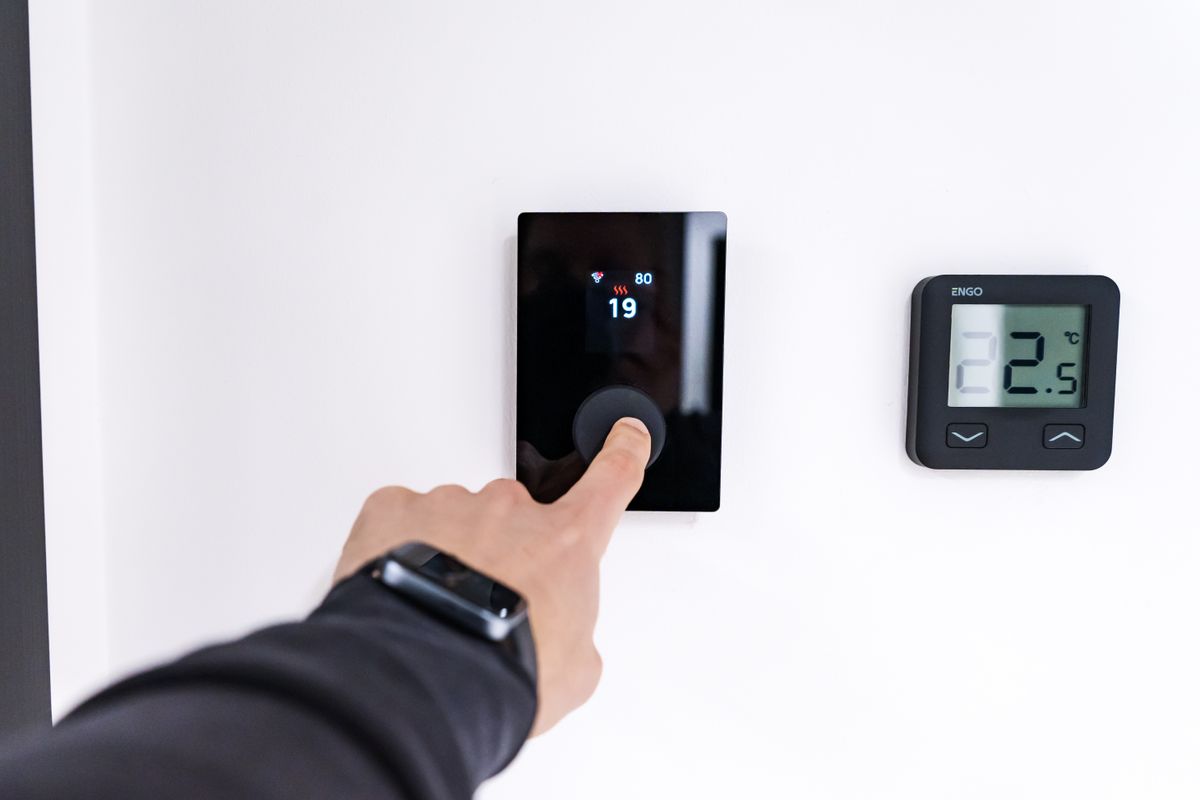
Now test the room thermostat. Turn it up above the current room temperature and wait a few minutes. If the boiler fires, the heating was simply not being called for — the thermostat was set too low, or, on a wireless model, its batteries have died. Turning a thermostat up does not heat a home faster, but as a test it proves the controls are talking to the boiler. Unsure which control does what? The Energy Saving Trust’s guide to thermostats and heating controls explains each one.
Check 2: Has the boiler got power?
Look at the boiler display. If it is blank, the boiler has no power, and nothing else on this list will work until it does. Check the fused switch near the boiler, then the fuse box for a tripped switch; reset it once. If it trips again straight away, stop — a fault is tripping it, and that is engineer work.
Check 3: Read the pressure gauge
With the system cold, the pressure gauge — a dial on the front or underside of the boiler, or a number on the display — should read 1 to 1.5 bar. Below 1 bar, many boilers lock out, and heating and hot water stop together. Topping up once, slowly, to 1 to 1.5 bar is a normal homeowner job; your manual shows your filling loop.
One warning: pressure does not drop for no reason. If yours keeps falling, do not just keep topping up — read our guide to boiler losing pressure for the causes, and the point where a falling gauge means a leak.
Check 4: Note the fault code, then reset once — only once
If the boiler shows a fault code or a flashing reset light, write the code down before you touch anything. Then press reset once. If the boiler fires and stays running, watch it for a day. If the same code comes back, do not keep resetting: the boiler is reporting a real fault, and the code is the first thing an engineer will ask for. Codes differ by make and model — Vaillant’s official boiler fault codes page shows its format; your manual does the same.
Check 5: Could the condensate pipe be frozen?
On a freezing morning this is the check most people miss. A condensing boiler drains water through a plastic condensate pipe, which on many homes runs outside. In a hard frost it can freeze; the boiler cannot drain and locks out — often with gurgling sounds or a fault code. Find the pipe where it leaves the wall near the boiler. If it is frozen, thaw it gently: pour warm — never boiling — water over it, or hold a hot water bottle against it. Boiling water can crack the pipe and scald you. Once thawed, reset once (Check 4).
Check 6: Walk the radiators
If the boiler fires but rooms stay cold, walk the radiators and feel where the cold sits. A thermostatic valve turned right down, or a radiator isolated after decorating, keeps it cold while the boiler works normally — open both valves and let it circulate.
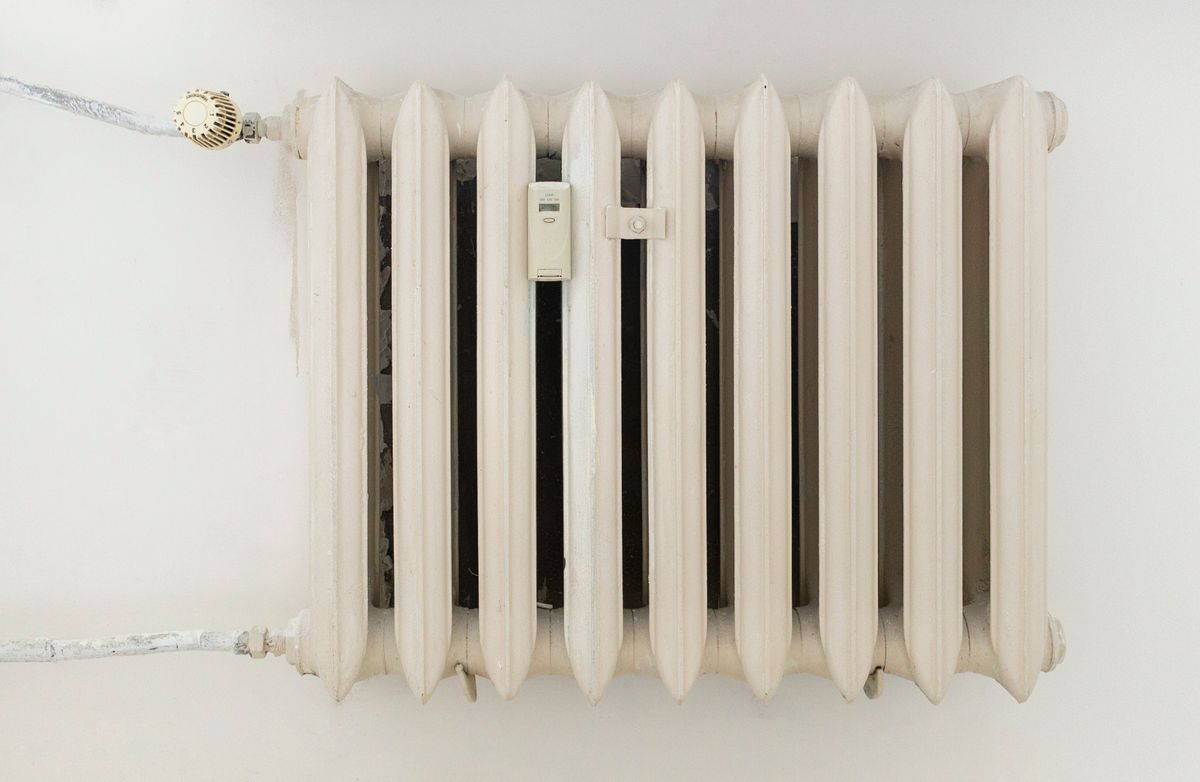
The pattern tells you more. Radiators cold at the top, especially upstairs, usually means trapped air: bleed them (heating off), then re-check the pressure (Check 3) — bleeding drops it. Hot upstairs but cold downstairs points to circulation — usually the pump — which is engineer work. Cold at the bottom of every radiator suggests sludge: again, a system problem, not a setting.
Check 7: Is gas actually reaching the boiler?
Try another gas appliance. If the hob lights normally, gas is reaching the house and supply is not your problem. If the hob is dead too, look at the meter — the display only. On a prepayment meter, check the credit: an empty meter is a classic cause of a “broken” boiler, and topping up plus one reset (Check 4) is the fix. Do not touch any fittings, valves or pipework at the meter or boiler. If the meter shows the supply is off, that is your gas supplier’s job — and if you can smell gas, skip to the safety note below now.
Check 8: Heating only, or hot water only?
If one side works and the other does not, the answer depends on your boiler type. On a combi, which heats water as you use it, heating without hot water often points to the diverter valve — the part that sends heat to the radiators or to the taps. That valve is inside the boiler, so it is engineer work. Your safe checks: the hot water dial on the boiler front (knocked down surprisingly often) and one hot tap run fully open.
On a system or regular boiler with a cylinder, check the programmer’s hot water channel is on, and that the cylinder thermostat — the dial strapped to the tank — has not been knocked down. If both are set correctly and the cylinder stays cold, the motorised valve that sends heat to the tank is the likely cause: an engineer’s job, but naming it when you call saves time.
The safety boundary, at every step: never remove the boiler casing, and never touch anything inside it. Everything inside a gas boiler is Gas Safe engineer work by law — the HSE’s gas safety guidance for homeowners sets it out. And if you smell gas: do not touch electrical switches, get out of the house, and call the National Gas Emergency number, 0800 111 999.
When to stop and call
Stop checking and call if any of these are true:
- You can smell gas. Leave the checks — and the house — and call 0800 111 999 first.
- The same fault code returns after one reset.
- All 8 checks pass and the boiler still will not run.
- There is water leaking from the boiler or the pipework around it.
- The fuse box switch trips again as soon as you reset it.
- The house has no heating and there is a baby, an elderly person or someone unwell at home. Do not wait until morning.
If you are in Bradford and the checks have not brought the heating back, this is what our emergency plumber in Bradford service is for. Call 01274 041977 and say what the display shows and which checks you have done — that tells the engineer most of the story.
Why this happens so often in Bradford homes
October switch-on is the peak moment for it. Boilers sit idle all summer, then must work hard on the first cold weekend — often the same weekend the clocks change. Older terraces and back-to-backs make it worse: ageing timers that lose their settings after a power cut, thermostat batteries that died in the spring, and boilers in cellars where a falling gauge goes unnoticed for weeks. Loft tanks and loft pipework add one more risk — the coldest pipes in the house feel the frost first. Rented homes add a final pattern: the timer still set to the last tenant’s routine. None of this means the boiler has failed.
How to stop it happening again
- Run the heating for 15 minutes once a month through summer, so pumps and valves do not seize while idle.
- Check the pressure gauge at the start of the heating season, before the first cold night.
- Put new batteries in a wireless thermostat every autumn.
- After the clocks change, check the programmer clock shows the right time.
- Lag condensate and water pipes that run outside or through an unheated loft — the frozen pipe in Check 5 is easier to prevent than to thaw.
- Keep the annual service booked. A boiler service in Bradford covers the pressure, safety and control checks that catch worn parts early.
FAQs
Why has my boiler stopped working but the power is on?
Power on only proves the boiler has electricity. Next rule out the timer or thermostat not calling for heat, low pressure, or a lockout with a fault code. Work through Checks 1, 3 and 4.
Should I keep pressing reset if the boiler keeps locking out?
No. Reset once. A boiler that locks out again is reporting a fault — repeated resets do not fix it and can hide the pattern an engineer needs to see. Note the fault code instead (Check 4).
Can low pressure stop both heating and hot water?
Yes. Below about 1 bar, many boilers lock out completely, so both stop together. Top up once, to 1 to 1.5 bar when cold. If it drops again within days, there is a fault to find.
My heating works but I have no hot water. What does that mean?
On a combi, it often points to the diverter valve, which sends heat to the radiators or the taps — engineer work inside the boiler. On a system boiler, check the programmer’s hot water channel and the cylinder thermostat first (Check 8).
Why did my heating stop on the first cold night of autumn?
Because it is the first time the system has worked hard since spring. Pumps and valves that sat still all summer can stick, thermostat batteries die quietly, and timers lose their settings. Work through the checks before assuming the boiler has failed.
Is no heating classed as an emergency?
In cold weather, yes — especially with a baby, an elderly person or someone unwell in the house, or if pipes could freeze. In mild weather it can usually wait for a normal booking. In a frost, it cannot.
Still cold after the checks? Call Plumber Bradford Pros on 01274 041977 and tell us what the boiler display shows — we are at 164 Dyson Street, Bradford BD9 4DE, and the checks you have done will point the visit the right way.