Quick answer: A healthy boiler sits at 1 to 1.5 bar when cold. If yours keeps dropping below 1 bar, water is escaping somewhere — most often a small leak, a pressure relief valve letting water out, a failed expansion vessel, or radiators that were bled and never topped back up. Topping up once is fine. Topping up every week means a fault an engineer needs to find.
Few heating problems are as common — or as misread — as a boiler losing pressure. The gauge creeps down, the boiler locks out, the house goes cold. So you top it up, it works again, and a fortnight later you are doing the same thing.
This guide walks through what the pressure should be, the five causes that cover almost every case, the checks you can safely do yourself, and the point where topping up stops being the answer.
Which of these sounds like your boiler?
- Pressure drops slowly over weeks — go to the causes table below; slow loss is usually a small leak or a bleeding after-effect.
- Pressure drops within a day or two of topping up — skip to “When topping up is not the answer”. That speed means a real fault.
- Boiler has locked out and shows a fault code — check the code table below, top up once if the code is a low-pressure code, then watch it.
- Pressure is fine but there is no heating — that is a different fault. Pressure is not your problem; controls, the pump or a valve are more likely.
What should boiler pressure be?
| Situation | Normal reading |
|---|---|
| System cold (heating off for a while) | 1 to 1.5 bar |
| Heating running hot | Up to around 2 bar is normal — water expands as it heats |
| Below 1 bar (cold) | Too low — the boiler may lock out to protect itself |
| At or above 3 bar | Too high — the pressure relief valve opens and lets water out |
Check the gauge — a round dial on the front or underside of the boiler, or a number on the digital display — when the system is cold. A reading taken while the heating is hot always looks higher and tells you very little.
The 5 causes of boiler pressure loss
| Cause | What you will notice | Who fixes it |
|---|---|---|
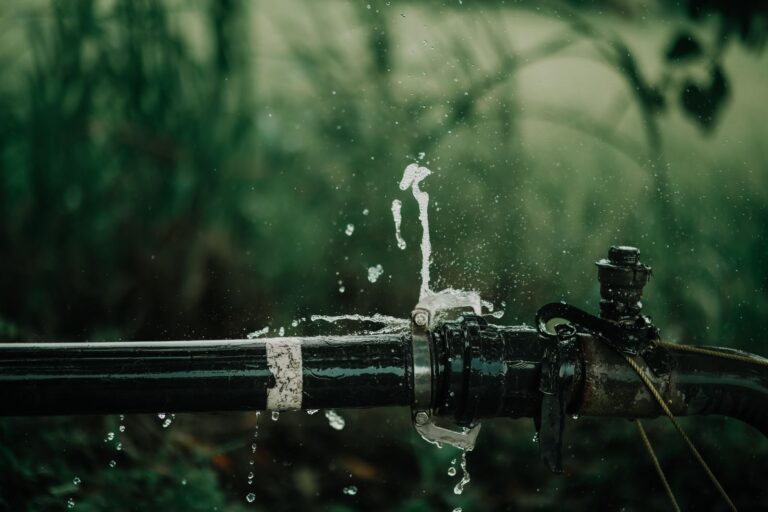
| A leak somewhere in the system — a radiator valve, a joint, pipework under a floor | Damp patch, rust or green staining on a valve or joint; pressure falling steadily | Finding it: you can look. Fixing it: engineer or plumber |
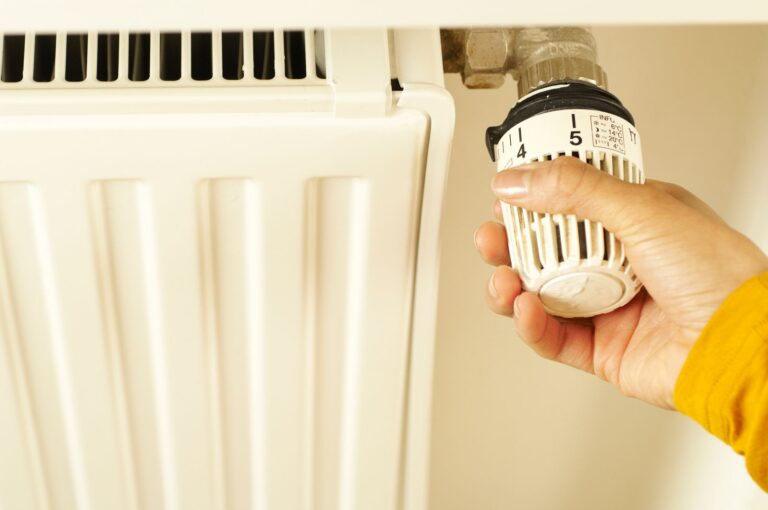
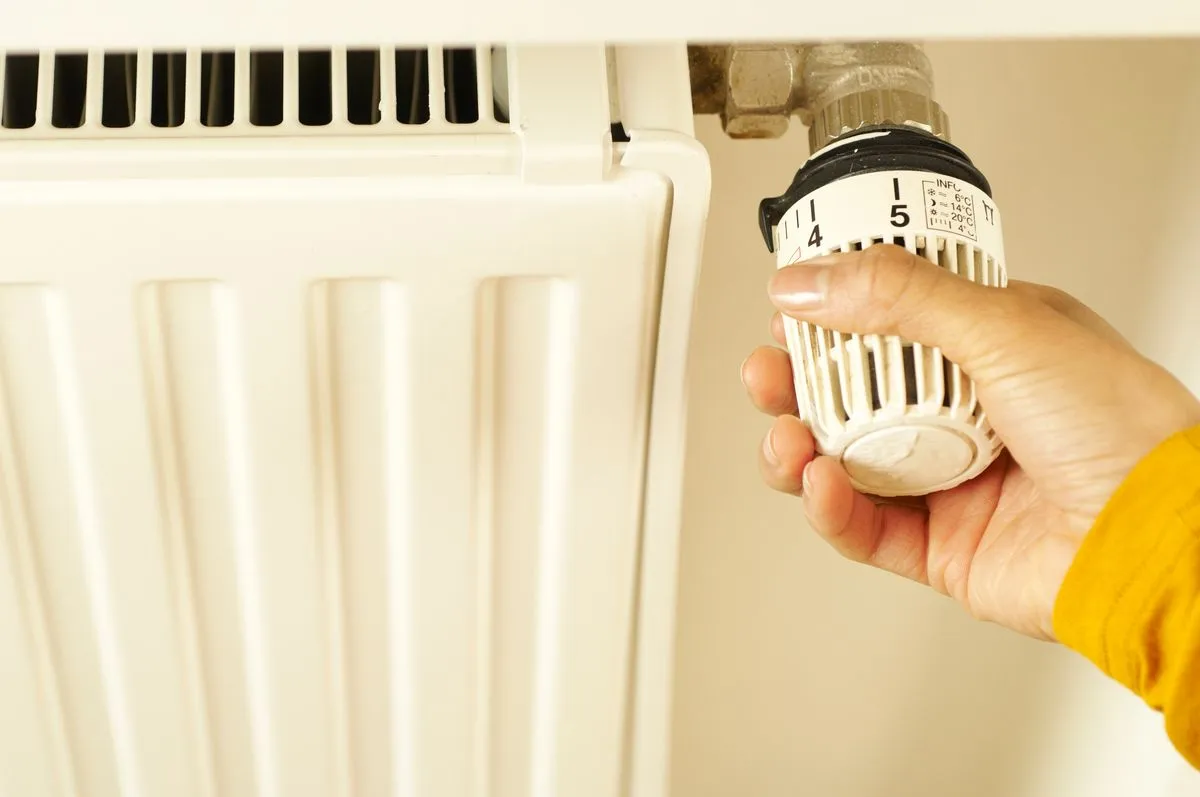
| Radiators bled recently | Pressure dropped straight after you bled air out of radiators | You — bleeding lets water out too, so top up afterwards |
| Pressure relief valve (PRV) passing water | Water dripping from the small copper pipe that runs outside the wall near the boiler | Engineer — the valve or the cause behind it needs attention |
| Expansion vessel lost its charge or failed | Pressure climbs high when the heating is on, then drops low when cold; water from the outside pipe | Engineer only — internal part |
| Filling loop left slightly open, or a faulty filling loop | Pressure behaving oddly after a recent top-up; loop valves not fully closed | You can check the valves are fully closed; a faulty loop is an engineer job |
One point worth understanding: pressure does not evaporate. Sealed systems only lose pressure when water gets out or a part that manages pressure is failing. That is why repeated topping up is a symptom-chase, not a repair — and it dilutes the corrosion inhibitor in the system each time you add fresh water.
Safe checks you can do yourself
Do these in order. None of them involves opening the boiler.
- Read the gauge cold. Heating off, system cooled down. Below 1 bar confirms low pressure is your fault.
- Walk the radiators. Feel and look around every radiator valve and joint. Look for damp, rust streaks or green-white staining. Check towel rails the same way — they are frequent leakers.
- Look under the boiler. Any dripping, staining or a puddle on the worktop or floor below it? Note where it comes from if you can see it safely — do not touch anything inside the casing.
- Check the outside pipe. Find the small copper pipe that exits the wall near the boiler. If it drips while the system runs, the pressure relief valve is letting water out — that is your pressure loss leaving the house.
- Think back. Did you bleed radiators in the last few weeks? Did anyone top the system up and possibly leave the filling loop valves not fully closed? Half of “mystery” pressure loss is explained by one of these two.
If a radiator is cold at the top, trapped air is part of the picture — bleed it, then top the pressure back up (bleeding always drops the reading). If radiators are cold at the bottom instead, that is sludge, a different problem covered by our central heating advice — see our central heating service in Bradford page for what a system clean involves
How to top up (re pressurise) your boiler — safely
Topping up is a normal homeowner job. The method differs by boiler, so your boiler’s manual is the authority for your model — manufacturers publish their own walk-throughs, for example Worcester Bosch’s guide to boiler pressure
The general pattern:
- Switch the boiler off and let the system cool.
- Find the filling loop — a silver braided hose with a valve at each end under the boiler, a built-in key, or a lever, depending on the model.
- Open the valves slowly and watch the gauge rise.
- Close both valves firmly the moment the gauge reaches 1 to 1.5 bar. Do not overfill — push it too high and the relief valve will dump the excess outside.
- Switch the boiler back on. If it locked out, you may need to press reset once.
Then watch the gauge over the next few days. That watching is the diagnostic step most people skip.
Fault codes that mean low pressure
Codes vary by model and age — always confirm against your manual — but these are the common low-pressure codes:
| Brand | Code | Meaning |
|---|---|---|
| Ideal | F1 | Low water pressure — top up via the filling link |
| Vaillant | F.22 | Pressure below 1 bar |
| Baxi | E119 | Low water pressure lockout (below roughly 0.5 bar) |
| Worcester Bosch | H07 (newer Green star models) | System pressure too low — many older models show no code, just a low gauge |
Note the code before you reset. If you end up calling an engineer, that code is the first thing they will ask for.
When topping up is NOT the answer — stop and call
Top up once and monitor. Call an engineer if any of these are true:
- Pressure drops again within a few days of topping up.
- You are topping up every week or two as a routine.
- You can see water — a drip, a damp patch, a wet ceiling below a pipe run.
- The outside relief pipe drips whenever the heating runs.
- The boiler shows a fault code that is not a low-pressure code, or the same code keeps returning after one reset.
- You can smell gas, or the boiler is making banging or kettling noises. Stop, and treat it as urgent. Anyone who works on a gas boiler must be Gas Safe registered by law — the HSE’s homeowner guidance i
Never remove the boiler casing yourself. Everything inside it — the expansion vessel, the relief valve, the pump — is engineer work, and on a gas appliance it is Gas Safe work.
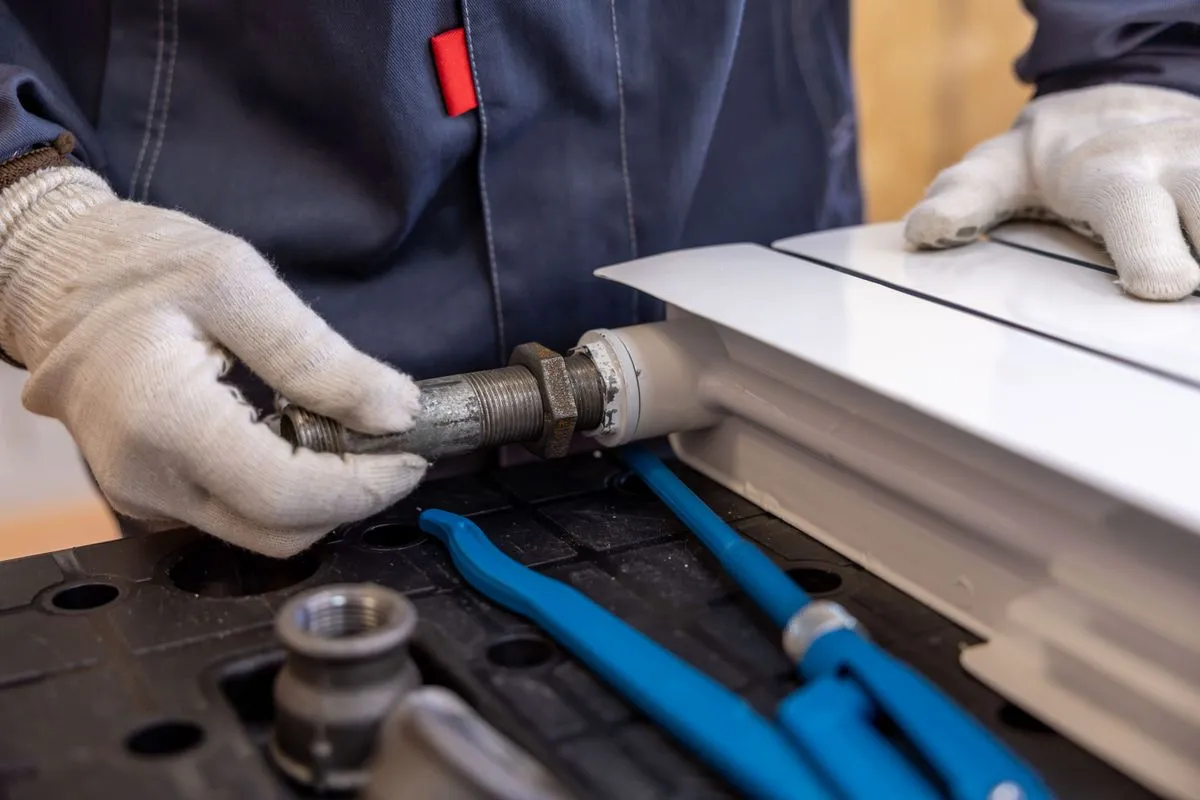
[IMAGE: content-radiator-pipe-repair.jpg — Alt: “Plumber repairing a radiator pipe and valve, a common cause of a boiler losing pressure”]
If you are in Bradford and the pressure will not stay up, this is exactly the fault-finding a service visit covers. Our boiler service in Bradford includes pressure and safety checks across the system, and an engineer can test the expansion vessel and relief valve in the same visit
Call 01274 041977 and say what the gauge reads cold and how fast it drops — those two facts tell an engineer most of the story before he arrives.
What will it cost to fix?
Topping up yourself costs nothing. Beyond that, it depends entirely on the cause, which is why any honest price comes after diagnosis:
| Situation | Typical route |
|---|---|
| Pressure dropped after bleeding radiators | Top up yourself — £0 |
| Cause unknown, pressure falling steadily | An engineer’s diagnostic visit; the fix is quoted once the cause is found |
| Expansion vessel needs recharging or replacing, or PRV needs replacing | Engineer repair — parts + labour, quoted after diagnosis |
| System also due its annual service | Combine the two — an annual boiler service in the UK typically costs £80–£140 (UK guide average), and pressure, leak and safety checks are part of what a service covers |
An annual service is also what catches pressure problems early. As the Energy Saving Trust’s boiler service guide puts it, a service is like an MOT for your boiler — it includes visual checks for leaks and corrosion, exactly the things that cause pressure loss
Why this is so common in Bradford homes
Bradford’s housing stock works against sealed heating systems. Older terraces and back-to-back houses often have ageing radiator valves and pipework that has been in place for decades — the joints weep slowly, and a weep you would never notice on a floorboard is enough to drop a gauge over a fortnight. Many homes also have the boiler in a cellar or kitchen extension with pipe runs through cold spaces, which makes the outside relief pipe and exposed joints the first places to check. None of this means your system is failing — it means a small, find able leak is the most likely explanation here, and it is worth finding rather than topping up around it.
How to stop it happening again
- Check the gauge once a month through winter — ten seconds, catches a slow drop early.
- After bleeding radiators, always top the pressure back to 1–1.5 bar.
- Fix a weeping valve when you first see staining, not when the boiler locks out.
- Keep the annual service booked. Pressure behaviour between services is one of the best early warnings a system gives you.
FAQs
How often should I have to top up my boiler pressure?
Almost never. A healthy sealed system can hold its pressure for a year or more. Needing to top up every few weeks means water is escaping or a pressure part is failing — that needs diagnosis, not a routine.
Is it safe to use the boiler when the pressure is low?
The boiler will usually protect itself by locking out before any damage is done, so low pressure is not normally a danger — but do not keep resetting and running it. Top up once; if it drops again, get it looked at.
My pressure goes up when the heating is on. Is that normal?
Yes, within limits. Water expands as it heats, so a rise from about 1–1.5 bar cold to around 2 bar hot is normal. If it climbs towards 3 bar and then drops low when cold, the expansion vessel likely needs an engineer.
Can I fix a failed expansion vessel myself?
No. It is inside the boiler, and work inside a gas boiler is Gas Safe engineer work by law. The homeowner checks in this guide are deliberately everything outside the casing.
Why did the pressure drop after I bled my radiators?
Bleeding releases air, but water follows it out, so the system pressure falls. That drop is expected — top back up to 1–1.5 bar once you have finished bleeding.
There is water dripping from a pipe outside. What is that?
That is the pressure relief discharge pipe. Dripping means the relief valve is letting water out — either pressure went too high, or the valve itself is passing. Either way it explains your pressure loss and needs an engineer.