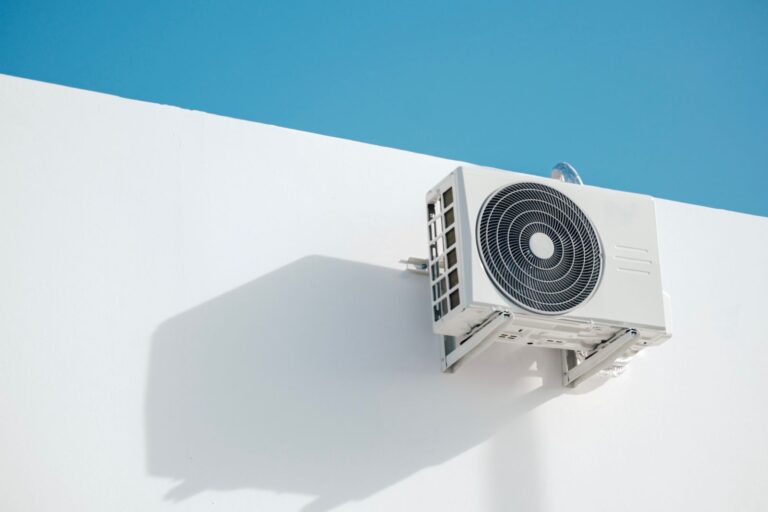
An air source heat pump for a typical Bradford home costs around £12,000 to install, according to the Energy Saving Trust, and the Boiler Upgrade Scheme grant can take £7,500 off that bill in England and Wales, leaving roughly £4,500 to pay before any extra work such as larger radiators. Whether that headline figure applies to your home depends on your insulation, your radiators, the space outside for the unit, and the heating system you are replacing. This guide covers the real costs, the grant rules, the running costs honestly, and the checks that decide whether a heat pump suits your home.
Find your situation first
- You want the bottom line: go to what an air source heat pump costs.
- You want the grant rules: go to the £7,500 grant, and the £9,000 rate.
- You are worried about running costs: go to what it costs to run.
- You are not sure your home suits one: go to will a heat pump work in your home.
- You want to compare quotes: go to comparing quotes like for like.
How an air source heat pump heats your home
An air source heat pump does not burn fuel to make heat. It takes heat that is already in the outside air, even on a cold day, and moves it indoors at a higher temperature, in the same kind of cycle a fridge uses in reverse. The most common domestic type is air-to-water: it heats water for your radiators or underfloor heating and for your hot water cylinder. Air-to-air systems blow warm air into rooms, provide no hot water, and qualify for a much smaller grant.
Because a heat pump moves heat rather than generating it, it can deliver three to four units of heat for every unit of electricity it uses, according to the Energy Saving Trust. That efficiency is why running costs need a careful look rather than a sales promise: a heat pump runs on electricity, and electricity costs more per unit than gas, so your tariff matters as much as the machine.
What an air source heat pump costs
The figures below are UK guide averages, not this business’s prices. The typical installed cost comes from the Energy Saving Trust’s heat pump guide, and the breakdown comes from Checkatrade’s air source heat pump cost guide, last updated May 2026. Your quote will differ with home size, system size and extra work.
| Item | UK guide average | Notes |
|---|---|---|
| Air source heat pump, typical installed cost | Around £12,000 | Energy Saving Trust typical figure, before any grant |
| Air-to-water heat pump, supply and installation | Average £15,000 | Checkatrade average; overall range £3,000 to £15,000 by system type |
| Air-to-water unit, supply only (5kW to 17kW) | Average £7,000 (£5,000 to £9,000) | Larger homes need larger, dearer units |
| Air-to-water installation labour only | Average £8,000 (£6,000 to £11,000) | Pipework, controls, cylinder and commissioning |
| Air-to-air heat pump, supply and installation | Average £3,000 (£2,000 to £4,000) | Heats air only, no hot water; smaller grant applies |
| Upgrade to larger radiators (10 radiators) | Average £3,000 (£2,000 to £5,000) | Needed in many homes |
| Annual heat pump servicing | £150 to £300 a year | Recommended annually |
Two things in that table catch people out. First, the Energy Saving Trust’s typical £12,000 and Checkatrade’s £15,000 average for air-to-water systems are different samples of a market where system size and extra work vary a lot, so treat both as a range, not a promise.
The £7,500 grant, and the £9,000 rate
The Boiler Upgrade Scheme is the government grant for England and Wales that takes money off a heat pump installation. You do not apply for it yourself and you do not claim it back afterwards. Your installer applies on your behalf, and the grant is shown as a discount on your quotation and invoice.
| System | Grant | Notes |
|---|---|---|
| Air source heat pump (air-to-water) | £7,500 | The standard domestic heat pump grant, one per property |
| Air or ground source, oil or LPG home with no mains gas connection | £9,000 until March 2027 | An extra £1,500 on top of the standard grant, for vouchers in that window |
| Ground source heat pump | £7,500 | Also £9,000 on the same off-gas oil or LPG terms until March 2027 |
| Air-to-air heat pump | £2,500 | Heats air only and does not provide hot water |
You can usually get the grant if you own the property, including a second home, a business property, or a property you rent to tenants, and you are replacing a fossil fuel heating system such as oil, gas, electric or LPG heating. GOV.UK’s Boiler Upgrade Scheme pages set out the full conditions. Your installer must be MCS-certified, because only an MCS-certified installer can apply for the grant on your behalf, and must commission and install the heat pump within 120 days of applying.
The grant does not cover everything, and it does not apply to every home. You cannot get a grant for a hybrid system, where a heat pump works alongside a gas or oil boiler, or to replace a heating system that is already low carbon, such as an existing heat pump. Most new build properties and social housing are excluded, and a property that has already had government funding for a heat pump or biomass boiler cannot get another grant. If any of those apply to you, the grant column in your budget drops to zero, so check eligibility before you compare quotes.
What it costs to run
A heat pump is far more efficient than a boiler, but it runs on electricity, which costs more per unit than gas. The Energy Saving Trust says heat pumps should generally be cheaper to run than most other fuel types, but not necessarily cheaper than a newer gas or oil boiler. On a standard electricity tariff, a heat pump can cost about the same as, or slightly more than, a new gas boiler to run.
What usually tips the balance is the tariff. A heat pump or time-of-use tariff, which charges less for electricity at off-peak times, can make a heat pump cheaper to run than a gas boiler, according to the Energy Saving Trust. Against oil, LPG or direct electric heating, a heat pump usually wins more clearly on running costs than it does against mains gas.
Will a heat pump work in your home?
Use this table as a first check, not a final verdict. Only a proper heat-loss survey can size a system for your home.
| Check | Good sign | Warning sign |
|---|---|---|
| Insulation | Loft and cavity wall insulation in place, draughts dealt with | Uninsulated solid walls; the system works harder and costs more to run |
| Radiators | Large radiators or underfloor heating, suited to lower flow temperatures | Small radiators sized for a boiler at 70 to 80 degrees; a heat pump runs cooler and may need larger radiators |
| Space outside | A garden, side passage or wall with airflow, clear of bedrooms and neighbours | No outside space, or only a spot under a bedroom window; noise and siting need care |
| Hot water | Room indoors for a hot water cylinder | No space for a cylinder |
| Current heating | Oil, LPG, electric or an old gas boiler being fully replaced | A hybrid plan, or replacing an existing low-carbon system; neither qualifies |
The radiators point deserves emphasis, because it is the most common extra cost. A traditional boiler heats water to around 70 to 80 degrees, while a heat pump typically works at around 35 to 55 degrees. Cooler water needs more radiator surface to give out the same heat, so many homes need larger radiators or more of them. If a quote never mentions your radiators, ask why.
Planning permission is usually not needed, because most heat pump installations are permitted development, but listed buildings and conservation areas are exceptions, so check with the local planning department before committing.
When to stop and call
Call before you sign anything if any of these apply: a quote does not say whether the grant is included or what happens if the grant application fails; a quote never mentions radiators, insulation or a heat-loss survey; you are being asked to pay in full before the grant is approved; the installer cannot show MCS certification; or you are unsure whether your home qualifies at all.
If your old boiler is being removed as part of the switch, remember the safety boundary: gas work is for a Gas Safe registered engineer only, never open a boiler casing, and if you can smell gas, leave the property and call the National Gas Emergency line on 0800 111 999. For an air source heat pump service in Bradford visit, an engineer can talk through whether your home suits a heat pump. You can call Plumber Bradford Pros on 01274 041977.
Comparing quotes like for like
Get at least three quotes from MCS-certified installers, and make each one answer the same questions before you compare prices. A cheaper quote that leaves out radiator upgrades, pipework changes or electrical work is not cheaper; it is incomplete.
- Is the grant shown separately? The quote should show the grant as a discount, and say what you pay if it is refused.
- What size system, and why? The quote should be based on a heat-loss survey of your home, not the size of your old boiler.
- Are radiators included? Ask exactly which radiators change, and what more would cost.
- Is the cylinder included? Air-to-water systems need a hot water cylinder, and space for it indoors.
- What is not included? Electrical upgrades, removal of the old system, servicing and redecoration should each be named included or excluded.
- What efficiency is promised? Ask for the seasonal efficiency figure for your home’s design, not the datasheet headline.
One more decision changes the whole comparison. If your boiler is old but still working, you may be choosing between a new boiler and a heat pump, not between a heat pump and nothing. Our guide on whether to repair or replace your boiler covers the signs that a boiler is at the end of its life, which is when the heat pump comparison becomes a real one.
What this means for Bradford homes
Bradford’s housing shapes this decision. Many homes are older terraces and back-to-backs with solid walls, where insulation is harder than in a modern cavity-wall house, and where a heat pump will work harder if heat loss is not dealt with first. That does not rule a heat pump out, but the insulation question should come before the machine question in these homes.
Space is the second Bradford factor. Terraced streets often mean a small yard or a shared passage rather than a large garden, so where the outdoor unit sits, how much airflow it gets, and how close it is to neighbours and bedrooms all need a proper look on site. Flats and smaller homes may suit an air-to-air system better, but that system heats air only, provides no hot water, and qualifies for only £2,500 rather than £7,500. A central heating service in Bradford is a good first step: it shows how your home holds heat before you commit to a new system.
Should you switch now, or wait?
Switch now if your boiler is failing, you are replacing a fossil fuel system anyway, your home is reasonably insulated or you plan to insulate, and you qualify for the grant. The £9,000 off-gas rate ends in March 2027, so oil and LPG homes without mains gas have a dated reason to move sooner rather than later.
Wait, or at least pause, if your boiler is new and reliable, if your home loses a lot of heat and you have no insulation plan, if you have no suitable outside space, or if the only quote you have never mentions radiators or a heat-loss survey. Insulating and getting proper quotes first makes the eventual system smaller and cheaper to run.
Frequently asked questions
How much does an air source heat pump cost in the UK?
Around £12,000 is the Energy Saving Trust’s typical installed figure, before any grant; Checkatrade’s air-to-water average is £15,000.
How much is the Boiler Upgrade Scheme grant?
£7,500 in England and Wales, rising to £9,000 until March 2027 for oil or LPG homes with no mains gas connection. Air-to-air qualifies for £2,500.
Do I apply for the grant myself?
No. Your MCS-certified installer applies through Ofgem, and the grant is shown as a discount on your quote and invoice. Installation must be completed within 120 days of applying.
Is a heat pump cheaper to run than a gas boiler?
Not automatically. On a standard electricity tariff it can cost about the same as, or slightly more than, a new gas boiler to run. A heat pump or time-of-use tariff is what usually tips the balance.
Will I need new radiators for a heat pump?
Often, yes. A heat pump runs at around 35 to 55 degrees, much cooler than a boiler at 70 to 80 degrees, so many homes need larger radiators.
Do I need planning permission for a heat pump?
Usually no. Listed buildings and conservation areas are exceptions, so check with the local planning department first.
Plumber Bradford Pros, 164 Dyson Street, Bradford BD9 4DE. Call 01274 041977.