Yes, it is normal for an air source heat pump to ice up in winter. In cold, damp weather, frost forms on the outdoor coil, and the heat pump clears it by itself with a defrost cycle that usually lasts 5 to 15 minutes. During the cycle the fan goes quiet, steam rises, and the radiators feel cooler for a short time. All of that is normal. Ice only becomes a fault when it stays after several defrost cycles, covers the whole unit, traps the fan, or comes with a big drop in heating. A heat pump service costs around £150 to £300 a year as a UK guide average (Checkatrade, May 2026).
Find your sign first
- A thin white frost on the back of the outdoor unit: normal in cold, damp weather. Watch it clear at the next defrost cycle.
- Steam rising from the unit while the fan has stopped: normal defrost: the steam is water vapour from melting ice, not smoke.
- The radiators feel cooler for 10 to 15 minutes: normal during and just after defrost.
- Thick ice that stays after two or three defrost cycles: a fault sign. Read the causes table below.
- Ice covering the whole unit, or the fan stuck in ice: switch the heat pump off at the controller and call an engineer.
- Defrost every 10 to 20 minutes, or a defrost that runs for more than 15 minutes: a fault sign. The sensors or the reversing valve may be the cause.
- Water pooling under the unit and freezing into a sheet of ice: a drainage problem. Keep people off the icy patch.
- A fault code, or no heat at all after defrost: call an engineer and note the code first.
Why does a heat pump ice up in winter?
An air source heat pump takes heat from the air outside, even when that air feels cold. The Energy Saving Trust explains how heat pumps take heat from outdoor air and move it indoors. The outdoor coil is colder than the air around it, often well below freezing. Moisture in the air condenses on the cold coil and freezes, exactly like frost on a car windscreen.
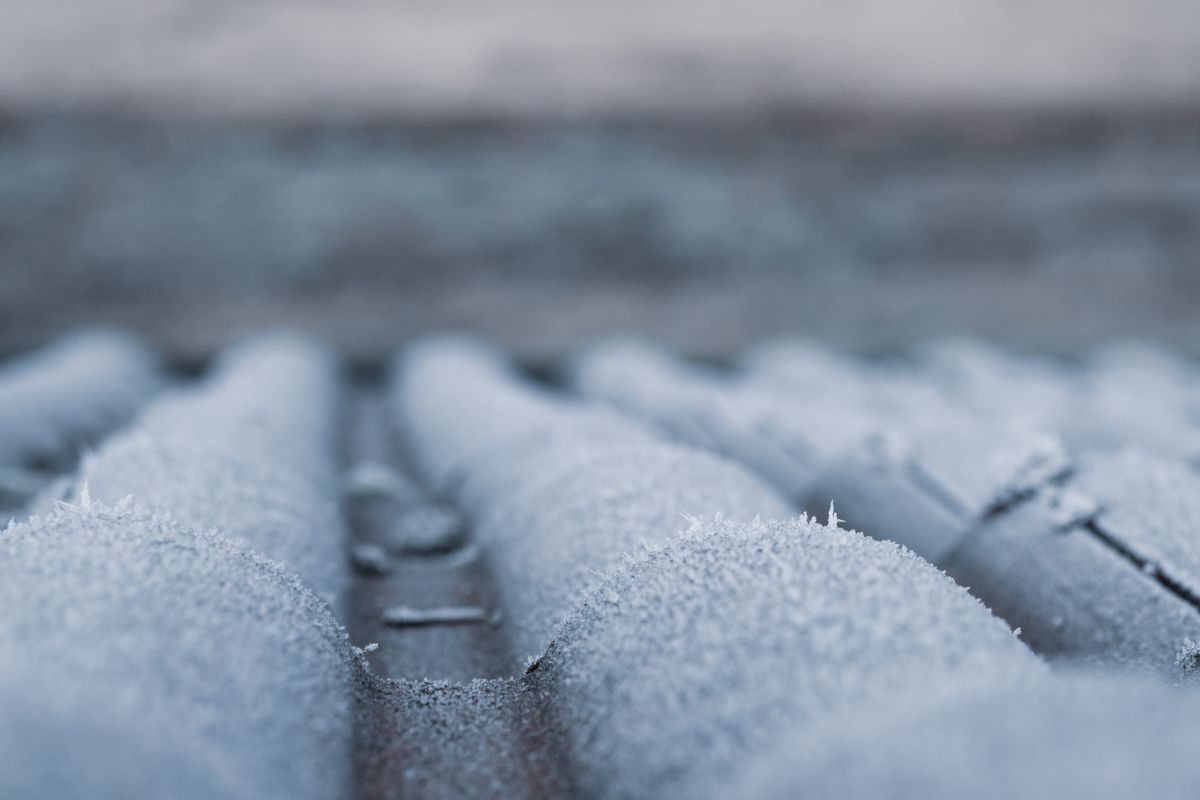
Icing is worst in mild, damp weather, not deep cold. Frost builds fastest at around 0°C to 5°C with high humidity, a typical Bradford winter day. In dry cold at minus 10°C, the air holds far less moisture, so less ice forms.
Ice on the coil insulates it, so less heat passes through; it blocks airflow between the fins, so the fan works harder; and if it keeps building, the heat pump cannot take in enough heat at all. That is why every air source heat pump has a defrost cycle built in.
How a defrost cycle works
During a defrost cycle the heat pump briefly reverses: hot refrigerant flows through the outdoor coil, the coil warms up fast, and the ice melts in 5 to 15 minutes. Then normal heating starts again.
While the cycle runs, you will usually notice four things. The outdoor fan stops, because blowing cold air over the coil would slow the melting. The compressor keeps running. Steam rises from the unit as the ice melts: this is water vapour, and it is the most commonly misread heat pump signal — it looks like smoke, but it has no smell and stops when the cycle ends. And the radiators run cooler for 10 to 15 minutes, because the heat used to melt the ice came from the heating circuit.
Defrost is already included in the unit’s seasonal efficiency rating, so it is not a hidden extra cost.
How often should a heat pump defrost?
How often a heat pump defrosts depends on the weather. The table below is a rough guide for UK winter conditions.
| Conditions | How often | How long |
|---|---|---|
| 5°C, dry air | Every 2 to 4 hours | 5 to 10 minutes |
| 3°C, damp, light rain | Every 60 to 90 minutes | 8 to 12 minutes |
| 0°C, freezing fog | Every 30 to 45 minutes | 10 to 15 minutes |
| Minus 5°C, snow | About every hour | 8 to 12 minutes |
| Minus 10°C, dry cold | Every 2 to 3 hours | 5 to 10 minutes |
If your heat pump defrosts far more often than the table suggests, or far less often while ice keeps building, note the time and temperature. That short note helps an engineer: a fault every 15 minutes looks very different from one once a day.
What causes a heat pump to ice up too much?
| Cause | What you will notice | Safe to check, or engineer job |
|---|---|---|
| Normal winter frost | A thin white layer on the coil; clears during defrost | Check below: watch one full defrost cycle |
| Blocked airflow around the unit | Leaves, bins, or fencing close to the unit | Check below: clear the space around the unit |
| Blocked or frozen drain | Meltwater pooling under the unit, then freezing | Check below: look at the drainage |
| Faulty defrost sensor | Defrost every 10 to 20 minutes, or in weather with no frost | Engineer job: the sensor needs testing |
| Failed defrost: ice stays after the cycle | Thick ice still on the coil after the cycle | Engineer job: controls, reversing valve, or refrigerant charge |
| Low refrigerant | Ice builds fast and heating is weak | Engineer job: only a qualified engineer handles refrigerant |
| Reversing valve fault | The unit stays in defrost for more than 15 minutes | Engineer job: switch the unit off and call an engineer |
| Fan trapped in ice | The fan will not turn, or makes a grinding noise when it tries | Engineer job: switch off and call an engineer; never force the fan |
Safe checks you can do yourself
Do these checks in order. They need no tools and no panels opened. If any check points to a fault, stop and call an engineer.
- Watch one full defrost cycle. The fan should stop, steam should rise, and within 15 minutes the ice should be gone and the fan running again. If the ice clears, the system is working.
- Check the room temperature. In a well-insulated home it usually drops by less than half a degree. A drop of more than 1°C points to radiators or insulation that are not coping: note it down.
- Look at the space around the unit. There should be clear air on all sides. Move bins and leaves away: leaves against the back cause one-sided icing.
- Look under the unit. Meltwater should drain away from the base. If water is pooling and freezing into a sheet, keep people off it. Do not pour hot water on it: it can damage the coil, and the water will only freeze again.
- Check the controller for fault codes. If a code is showing, write it down exactly as it appears. Do not keep resetting the unit: if the fault is real, it will come back, and repeated resets hide the pattern.
- Check the radiators after defrost. They should warm up again within 10 to 15 minutes. If one stays cold, note which one: that is a separate heating problem.
- Watch it for a full day. A single icy morning proves nothing. If the ice clears after every cycle and the house stays warm, the system is coping. If the problem repeats all day, call an engineer.
What you must not do
- Do not pour hot or boiling water over the unit. Vaillant warns against this directly: the heat pump is an electrical appliance, and sudden hot water can damage it and is dangerous. Let the defrost cycle do the work.
- Do not chip ice off the coil with a tool. The fins behind the ice are thin metal and bend easily, which blocks airflow.
- Do not cover the unit. A cover traps moisture and blocks airflow. The unit is designed to stand outside in winter.
- Do not open the casing or touch the parts inside. The casing protects live electrical parts: only a qualified engineer should open it.
- Do not keep resetting the unit to clear a fault code. Note it and call an engineer.
- Do not work on any gas appliance in the same visit. Gas work is for a Gas Safe registered engineer only. If you smell gas, leave the property and call 0800 111 999.
When to stop and call
Call an engineer if thick ice stays after two or three defrost cycles; the unit is covered in ice or the fan is stuck; defrost runs every 10 to 20 minutes; a cycle lasts more than 15 minutes; the unit defrosts in summer; meltwater keeps freezing around the base; a fault code keeps coming back; or the house will not warm up after defrost.
For an air source heat pump service in Bradford, an engineer can test the sensors and the reversing valve and check the refrigerant charge and drainage. Call Plumber Bradford Pros on 01274 041977. If the unit has stopped heating completely in freezing weather, call the same number straight away.
What does it cost to fix a heat pump icing problem?
An annual heat pump service costs around £150 to £300 as a UK guide average, from Checkatrade’s air source heat pump cost guide (May 2026), not this business’s price. A repair price depends on which part has failed, so an engineer prices it after inspecting the unit: there is no fixed guide figure for these faults.
A yearly service is the cheapest way to catch the causes of bad icing early: sensors are checked, the coil is cleaned, and the drainage is cleared before the first frost. Our guide to air source heat pump costs and the £7,500 grant explains what a service includes.
Heat pump icing in Bradford homes
Bradford’s winter is exactly the kind that ices heat pumps up: mild, damp, and often foggy, with temperatures around 0°C to 5°C for long spells. Homes near the River Aire and in the valley bottoms see more fog and damp air, so their heat pumps defrost more often. That is normal for the area.
Bradford’s older terraces and back-to-backs bring their own problem: small yards. A heat pump squeezed into a narrow yard, close to a wall or a fence, gets less airflow, and the damp air it has already cooled can blow straight back onto the coil. In a tight corner, keeping it clear matters more than in an open garden.
Meltwater is the other local problem. Water from defrost runs off the unit and, on a freezing night, turns into a sheet of ice on a yard or path, and in a small yard the path to the back door often runs right past the unit. Keep that path gritted on frosty nights, and if water keeps pooling, ask an engineer to look at the drainage. For homes with central heating service in Bradford, a winter service visit is also a good time to have the radiators checked: radiators that are too small make the cold spell after each defrost feel worse.
How to prevent bad icing
- Keep the space around the unit clear all winter. Check it monthly for leaves, bins, and anything stored against it.
- Book a yearly service before the cold weather. Sensors, coil cleaning, and drainage are checked in one visit.
- Keep the drainage clear. Leaves in the drain tray are the usual cause of pooling meltwater.
- Do not turn the heat pump off on frosty nights. A running system keeps its water moving and defrosts as needed, while a system left off can ice up badly.
- Keep the radiators balanced. Radiators that heat evenly make the cool spell after defrost barely noticeable.
Frequently asked questions
Is it normal for my heat pump to ice up in winter?
Yes. In cold, damp weather, frost forms on the outdoor coil and the heat pump clears it with a defrost cycle lasting 5 to 15 minutes. Ice is only a fault when it stays after several cycles or traps the fan.
Why is there steam coming from my heat pump?
The steam is water vapour from melting ice during a defrost cycle. It looks like smoke, but it has no smell and stops when the cycle ends.
Why do my radiators feel cold during defrost?
The heat pump borrows heat from the heating circuit to melt the ice, so the radiators run cooler for 10 to 15 minutes. In a well-insulated home the room temperature drops by less than half a degree.
Can I pour hot water on my heat pump to defrost it?
No. The heat pump is an electrical appliance, and hot water can damage it and is dangerous. Do not chip the ice off either: let the defrost cycle do the work, and call an engineer if the ice will not clear.
When should I call an engineer about ice on my heat pump?
Call an engineer if thick ice stays after two or three defrost cycles, the fan is stuck, defrost runs every 10 to 20 minutes, a cycle lasts more than 15 minutes, a fault code keeps coming back, or the house will not warm up after defrost.
Plumber Bradford Pros, 164 Dyson Street, Bradford BD9 4DE. Call 01274 041977 for an air source heat pump service in Bradford.