High boiler pressure is worth fixing, but it is usually a small fault. Normal pressure is 1 to 1.5 bar when the system is cold, rising to around 2 bar when the heating is running. If the gauge reads 2.5 to 3 bar when the boiler is cold, the pressure is too high. The commonest cause is a filling loop left open; the next is an expansion vessel that has lost its air charge. Do not keep topping up. Bleed one radiator with the heating off and the system cool, then watch the gauge. If it climbs back up again, call a Gas Safe registered engineer.
Which pattern is yours? Find your case in 10 seconds
Each pattern points at a different fault.
- Fine when cold, shoots to 3 bar when the heating runs: read the expansion vessel row below. This is the classic vessel fault.
- Rises even when the boiler is cold, or creeps up overnight: read the filling loop and plate heat exchanger rows.
- High all the time, with water dripping from a small pipe outside: the relief valve has opened. Read the valve row, then when to stop and call.
- High right after you bled radiators or topped the system up: you put too much water in. Read the safe checks and bleed a little water out.
- You rent your home: tell your landlord before you touch anything beyond reading the gauge.
What causes boiler pressure to rise too high?
Most high-pressure faults come from a short list.
| Cause | What you will notice | Safe to check yourself, or engineer job |
|---|---|---|
| Filling loop left open | Pressure rises even when the boiler is cold, or overnight | Safe to check: make sure the loop is fully closed |
| Expansion vessel has lost its air charge, or its diaphragm has failed | Normal cold, climbs fast to 3 bar when the heating runs | Engineer job: recharge or replace the vessel |
| Pressure relief valve (PRV) has opened and will not reseat | Water drips from the discharge pipe outside after the pressure falls; limescale trail below it | Engineer job: never operate the PRV yourself |
| Pinhole in the plate heat exchanger (combi boilers) | Pressure rises when the boiler is cold, slowly over days; hot water runs hot and cold | Engineer job: test and replace the exchanger |
| System overfilled after bleeding radiators or topping up | Pressure jumped after you added water; heating still works normally | Safe to fix: bleed a little water out of one radiator |
| Faulty pressure gauge or sensor | Gauge reads high but nothing else matches: no water outside, no change with the heating on | Engineer job: test the gauge or sensor |
Two causes often appear together: a failed vessel makes the relief valve open again and again, and a valve that has opened many times often fails to close properly.
What is normal boiler pressure, and when is it too high?
Read the gauge twice: once when the heating has been off for a few hours, and once after it has run for half an hour.
- 1 to 1.5 bar, cold: normal.
- Around 2 bar, hot: normal. Water expands as it heats, so pressure rises a little, then falls as it cools.
- 2 to 2.5 bar, cold: higher than it should be. Watch it.
- 2.5 to 3 bar, cold: too high. Do the safe checks, and book an engineer if it does not settle.
- 3 bar: the relief valve opens at around 3 bar and lets water out through a small pipe to outside. It is a safety device, but water from it means something is wrong.
Write both readings down. An engineer will ask for exactly that.
Safe checks you can do yourself, in order
Do these in order. Stop if water is leaking, the pressure hits 3 bar, or you smell gas. Never open the boiler casing. All gas work must be done by a Gas Safe registered engineer. Check yours on the Gas Safe Register.
- Read the gauge cold, then hot. Check the pressure with the heating off and the radiators cold, then again after half an hour of heating.
- Check the filling loop is fully closed. The filling loop is a short flexible hose under the boiler, with a small valve or lever at one or both ends. It tops the system up with mains water. Lever across the hose means closed; in line means open. Make sure both ends are fully closed. A loop left open after a top-up is the commonest cause of rising pressure.
- Look at the discharge pipe outside. Find the small pipe through the wall from the boiler, usually ending a few inches above the ground or over a drain. Look for drips, a damp patch, or a white or green limescale trail. Any of those means the relief valve has been opening.
- Look under the boiler for water. Check the floor and pipes below the boiler for drips or damp. If water is leaking from the boiler, turn it off and call an engineer.
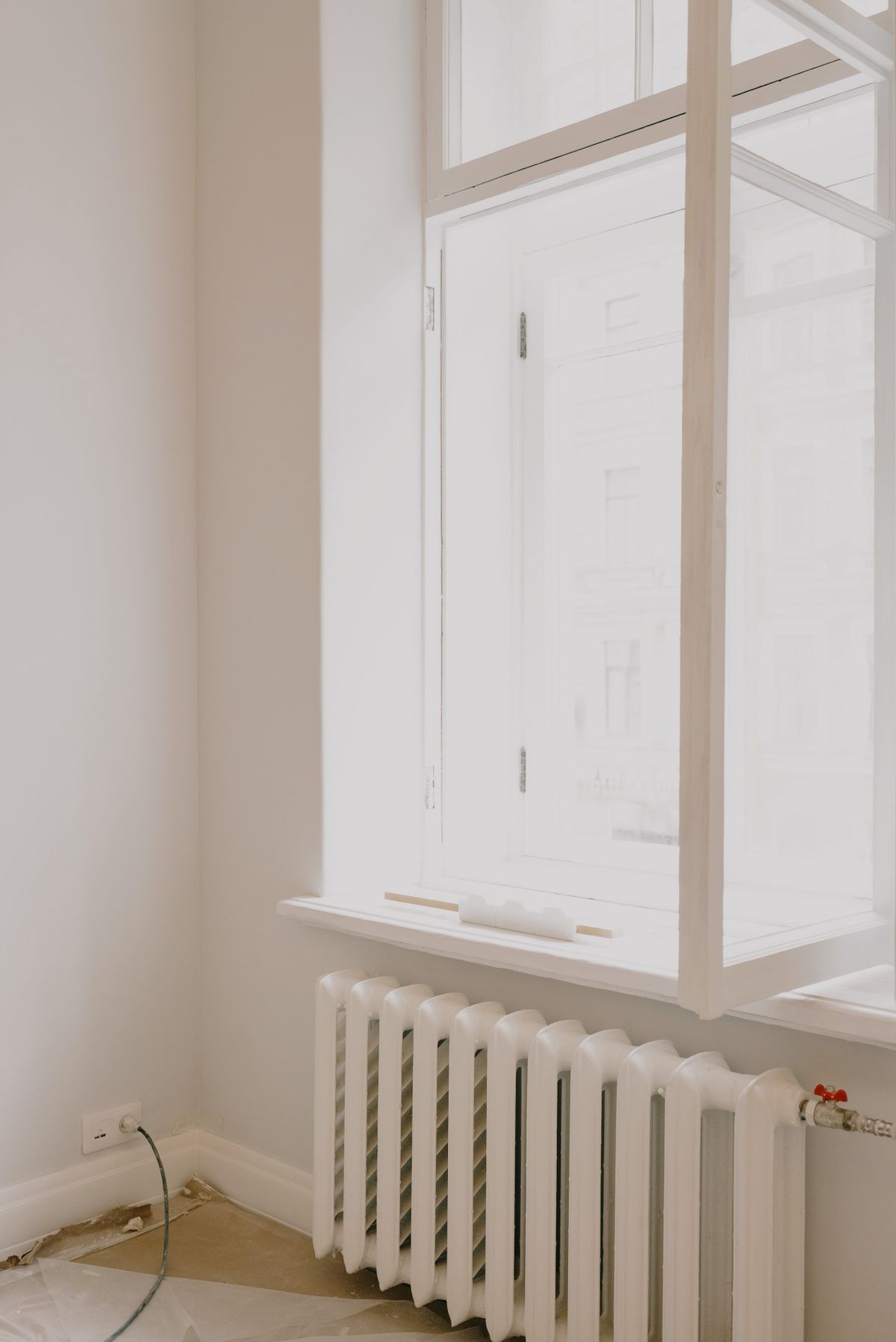
- Bleed a little water out of one radiator. Only do this with the heating OFF and the system cool. Take a radiator key and a cloth, open the bleed valve a quarter turn, and let a little water out until the gauge reads around 1.5 bar. Then close the valve firmly. Never bleed a radiator while the heating is running: the water is hot enough to scald.
- Watch the gauge for 24 hours. Check the pressure again the next day, cold. If it has climbed back up, the cause is still there.
Do not keep topping the system up. Topping up feels like a fix, because the pressure falls back for a while, but it is a loop: every top-up adds fresh water, raises the pressure again, and speeds up corrosion and sludge. If the pressure keeps rising, the water is getting in from somewhere it should not be. If your boiler keeps losing pressure instead, read our guide to why your boiler keeps losing pressure — the two problems have different causes.
What happens when an engineer visits?
Knowing what the visit involves makes it easier to judge a quote.
- Expansion vessel recharge or replacement. The engineer checks the air charge and pumps it back up if it has dropped. If the diaphragm has split, the vessel cannot hold its charge and must be replaced. A recharge is quick; a replacement takes longer, because the vessel often sits behind other parts.
- Pressure relief valve check. The engineer checks whether the valve closes cleanly after it has opened. A valve that has opened many times often keeps weeping, and then it must be replaced. Never operate the valve yourself: pulling the lever can stop it seating properly.
- Filling loop check. The engineer checks both valves close fully, and that the loop is not passing water when shut. A valve that lets water through while closed must be replaced.
- Plate heat exchanger test. If the pressure rises while the boiler is cold, the engineer tests the plate heat exchanger for a pinhole letting mains water into the heating circuit. A failed exchanger must be replaced.
- Gauge and sensor check. The engineer compares the boiler gauge against a test gauge, so a faulty reading is not mistaken for a real fault.
If the boiler is old and keeps failing, the engineer may talk about replacement. The Energy Saving Trust explains the main boiler types — combi, system and heat-only — which helps when weighing a repair against a new boiler.
When to stop and call a plumber in Bradford
Stop and call an engineer if any of these apply:
- The pressure reaches 3 bar, or water is coming out of the discharge pipe outside.
- The pressure climbs back up within a day of bleeding a radiator.
- Water is leaking from the boiler, or from a pipe you cannot identify.
- The gauge does not move, or reads the same whatever the heating is doing.
- The boiler locks out, shows a fault code, or will not restart.
- You can smell gas. Leave the property, do not switch anything electrical on or off, and call the National Gas Emergency Service on 0800 111 999.
If the pressure keeps rising and you are in Bradford, book a boiler service in Bradford and tell the engineer your two gauge readings, cold and hot. Call Plumber Bradford Pros on 01274 041977.
How much does it cost to fix high boiler pressure?
Every price below is a UK guide average from Checkatrade, last updated October 2026 — national guide figures, not this business’s prices.
| Job | UK guide average (Checkatrade, October 2026) |
|---|---|
| Typical boiler repair | £120–£750, average around £300 |
| Emergency boiler repair | £225–£675, average around £450 |
| Gas engineer hourly rate | £50–£80, plus parts |
| Boiler service | £80–£120 |
A vessel recharge sits at the cheaper end, because it is mostly labour. A replacement part costs more. For the full breakdown, see Checkatrade’s boiler repair cost guide.
Boiler pressure too high in a Bradford home: what is different here?
Bradford has many older stone terraces and back-to-backs, many with a combi boiler in a small kitchen. A combi in a tight cupboard is harder to reach, so the filling loop underneath it is easy to knock open and leave open. If your boiler is boxed into a cupboard, check the loop properly: feel both levers and make sure each one sits across the hose.
Many Bradford homes have a heat-only boiler with tanks in the loft. The expansion vessel sits separately, often in the airing cupboard, and the fault shows the same way: fine when cold, up to 3 bar when the heating runs. The vessel and filling loop are in different places, so ask the engineer to show you where they are.
Cold snaps off the Pennines put heating systems under their hardest load. The heating runs longer, the water gets hotter, and a weak vessel that coped in autumn starts failing in January. Fix it before the next snap.
Bradford has many student and landlord homes. If you rent, do not fix a pressure fault yourself beyond reading the gauge and telling your landlord: the boiler, filling loop and relief valve are the landlord’s responsibility. If you own an older system, a central heating service in Bradford once a year catches a failing vessel before it trips the relief valve.
How can I stop my boiler pressure rising again?
- Book a boiler service every year. A service checks the vessel charge and relief valve, so a slow fault is caught before it becomes a 3 bar problem.
- Check the gauge once a month. A quick look when the heating is cold takes seconds. If the cold reading has crept up, the filling loop or heat exchanger is letting water in.
- Leave the filling loop closed. After any top-up, close both valves fully and check the gauge the next day. A loop left half open is the commonest cause of this fault.
- Bleed radiators at the start of the heating season, then check the pressure. Top up only enough to reach 1 to 1.5 bar cold, then close the loop and leave it alone.
- Look at the discharge pipe now and then. A drip or limescale trail outside is the earliest sign the relief valve has been opening, often before you notice anything on the gauge.
FAQs: boiler pressure too high
What should boiler pressure be?
Between 1 and 1.5 bar cold, rising to around 2 bar when the heating is running. A cold reading of 2.5 to 3 bar is too high.
Is high boiler pressure dangerous?
The relief valve opens at around 3 bar and lets water out through a pipe outside, so the system is protected. But water from that pipe means something is wrong — call an engineer.
Why does my boiler pressure keep rising when the heating is on?
The expansion vessel has usually lost its air charge, or its diaphragm has failed. It absorbs the extra pressure as the water heats and expands. When it cannot, the pressure shoots to 3 bar every time the heating runs. An engineer must recharge or replace it.
Why does my boiler pressure rise even when the boiler is cold?
Mains water is getting into the heating circuit. The usual causes are a filling loop left open, or a pinhole in the plate heat exchanger on a combi boiler. Both need an engineer.
Can I lower boiler pressure myself?
Yes, by bleeding a little water out of one radiator, with the heating off and the system cool, until the gauge reads around 1.5 bar. Never touch the relief valve yourself.
Should I keep topping up my boiler?
No. Topping up only masks the fault: every top-up adds fresh water, raises the pressure again, and speeds up corrosion and sludge.
How much does it cost to fix high boiler pressure?
As a UK guide average from Checkatrade (October 2026), a typical boiler repair costs £120 to £750, averaging around £300. A vessel recharge sits at the cheaper end; a replacement part costs more.
Plumber Bradford Pros, 164 Dyson Street, Bradford BD9 4DE. Call 01274 041977 for a boiler service in Bradford.