Quick answer: Carbon monoxide is a colourless, odourless gas you cannot see or smell, so the warning signs are what your appliances show and how your family feels. On an appliance, look for a yellow or orange flame instead of a crisp blue one, soot or yellow-brown staining, a pilot light that keeps blowing out, and more condensation than usual on nearby windows. In people, look for headaches, dizziness, sickness, weakness, confusion and breathlessness that ease when you leave the house and return when you come back. If an alarm sounds, or anyone has these symptoms, get everyone into fresh air, call the National Gas Emergency line on 0800 111 999, and do not go back inside to investigate it yourself.
This guide covers appliance signs, symptoms in adults, children and pets, how this differs from flu or food poisoning, what to do first, alarm placement and testing, and the Bradford angle.
Which situation are you in?
- Your alarm is sounding — get everyone out and call 0800 111 999.
- Someone feels ill at home and better outside — treat it as a possible incident and get medical advice.
- You have spotted a warning sign on an appliance — stop using it and book a Gas Safe registered engineer.
- You have no alarm, or yours may not work — fit a BS EN 50291 alarm, test it, and book the annual service.
- You are a landlord — the alarm rule alongside the annual check is covered below.
What carbon monoxide is, and why you cannot detect it yourself
Carbon monoxide is made when gas, oil, wood or coal does not burn completely. In a home, that happens when an appliance is faulty, badly installed or poorly maintained, or when its flue or chimney is blocked. When you breathe it in, it stops your blood carrying oxygen to your cells and organs properly, and low-level exposure over a long period can still cause serious harm.
You cannot rely on your senses: the gas has no colour, smell or taste. So this guide works in two halves: what to look for on the appliance, and what to notice in the people who live there.
The signs on your appliances
The Health and Safety Executive lists four signs that gas may not be burning properly. Check them with your eyes only. Never open a boiler casing, remove a cover, or adjust a burner yourself. Gas work must be carried out by a Gas Safe registered engineer only.
| What you may notice | What it can mean | What to do |
|---|---|---|
| Yellow or orange flames, not crisp blue | Gas may not be burning completely | Stop using it; book an engineer |
| Soot, or yellow or brown staining, on or around it | Combustion products are escaping | Stop using it; book an engineer |
| A pilot light that frequently blows out | Burner or flue may not be working | Do not keep relighting it; book an engineer |
| More condensation than usual on nearby windows | Poor combustion or poor ventilation | Check ventilation; book a visit if it continues |
Two exceptions matter. Fuel-effect fires and flueless appliances are designed to show a yellow or orange flame, so flame colour alone does not condemn them. A boiler that keeps needing a reset, or a gas fire that burns slowly or goes out, is also worth a visit. See the HSE carbon monoxide awareness guidance for the full list.
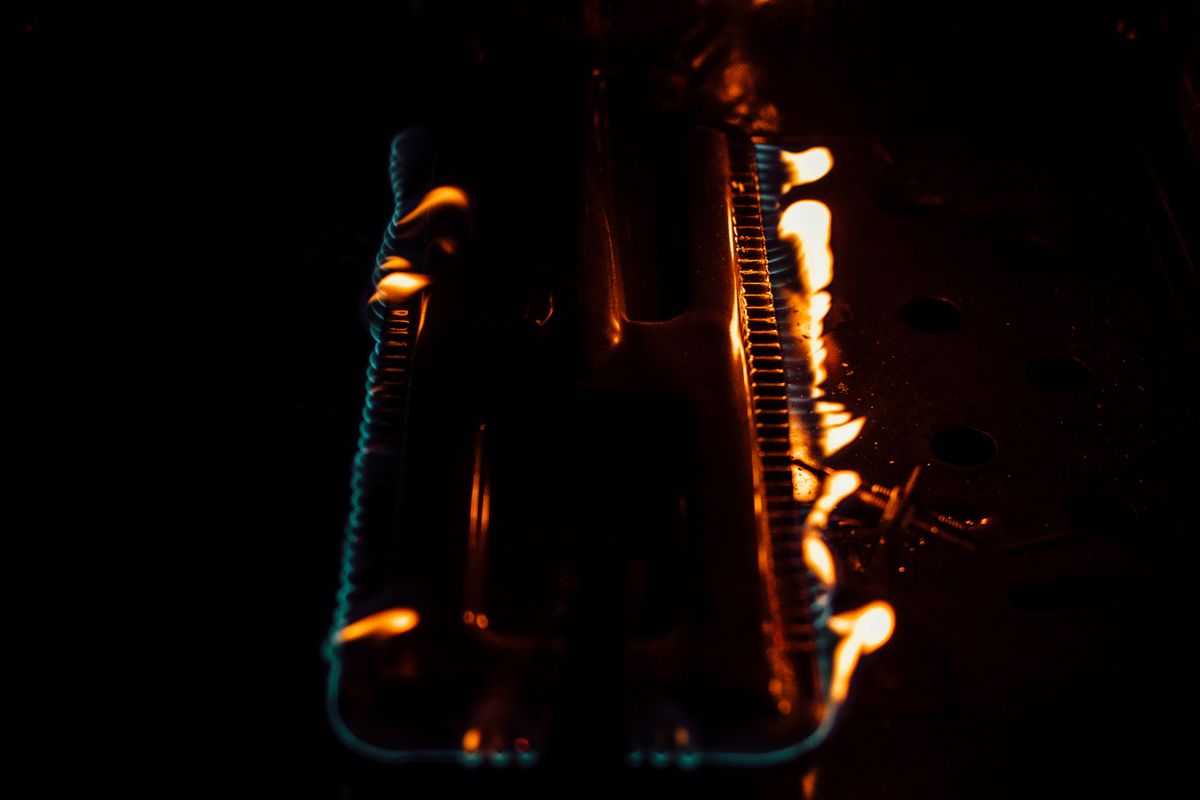
Different appliances fail differently. A gas fire flame lifting away from the burner, or soot above the fire, is a warning. A solid-fuel fire with smoke lingering in the room needs its chimney checked and swept first. A barbecue, camping stove, generator or vehicle engine must never be used indoors, in a garage or in a tent.
The symptoms in your family
The NHS lists these symptoms: headache, dizziness, sickness, weakness, tiredness and confusion, chest and muscle pain, shortness of breath, a face turning hot and red, and loss of vision. Early symptoms are easy to mistake for flu, so the pattern matters more than any single symptom.
See the NHS carbon monoxide poisoning guidance for the full list and when to call for help.
| Pattern | What it looks like | What it suggests |
|---|---|---|
| Mild, early symptoms | Headache, dizziness, nausea, tiredness, weakness | Possible low-level exposure; get fresh air and advice the same day |
| Symptoms that come and go | Ill at home, better outside, ill again on return | A strong clue; do not dismiss it as a virus |
| Several people ill at once | Two or more people with similar symptoms | Treat as a possible incident; get everyone out |
| Serious symptoms | Confusion, chest or stomach pain, visual problems, breathlessness | Urgent help; call 999 if breathing is difficult or someone loses consciousness |
Carbon monoxide, flu or food poisoning? How to tell them apart
Doctors and the HSE warn that early poisoning mimics flu, food poisoning and tiredness. Three differences help: if everyone at home is ill at the same time, if symptoms ease outside and return inside, and if there is no fever or sore throat. Flu usually comes with a fever and muscle aches that do not change when you go out. Food poisoning usually follows a shared meal and causes vomiting and diarrhoea, not headaches and confusion in several people. If you are unsure, treat it as carbon monoxide until an engineer and a doctor have ruled it out.
Children, older people and pets: who is affected first
Children, older people, pregnant women and anyone with a heart or breathing condition are affected more quickly and more seriously, and children may show symptoms first. A child who seems unusually sleepy, dizzy or sick at home, or a pet that is suddenly lethargic or vomiting, is a warning worth acting on the same day. If a pet is ill and people are ill too, get everyone out and call for help.
What to do, step by step, in order
If an alarm sounds, or you think someone may have carbon monoxide poisoning, follow these steps in order. Do not try to find the source first.
- Get everyone into fresh air. Open doors and windows on your way out if safe, and get children and pets out too.
- Call the National Gas Emergency line on 0800 111 999. It is free, open 24 hours a day, 7 days a week.
- Switch off the appliance and the gas at the meter valve only if safe. Do not go back into an unsafe room, and do not switch lights on or off if you smell gas.
- Get medical advice. Call NHS 111 if you think you might have symptoms. Call 999 if anyone struggles to breathe, is suddenly very drowsy, loses consciousness or has a seizure.
- Do not use the appliance again until checked by a Gas Safe registered engineer for gas, or a qualified technician for solid fuel.
- Tell your doctor you may have been exposed to carbon monoxide. That sentence changes the tests they run, as poisoning needs a blood test to confirm.
If the alarm sounds and then stops, still follow the steps above, and never remove the batteries to silence it.
Safe checks you can do yourself
These checks are safe for a householder. Everything else is an engineer job.
- Look at the flame. It should be crisp and mostly blue. A lazy, yellow or orange flame on a boiler or hob is a warning, and a flame that lifts away from the burner needs an engineer.
- Look around the appliance. Soot, staining, scorching or extra condensation nearby mean stop using it and book a visit.
- Check ventilation. Air vents and air bricks must not be blocked, and a flue terminal outside must not be blocked by plants, snow or a new extension.
- Test your alarms. Press the test button at least once a month, and check the expiry date. A past-expiry alarm must be replaced, even if it still sounds.
- Check the engineer. Check any engineer on the Gas Safe Register before booking, and ask to see their Gas Safe ID card on arrival.
Never open a boiler casing, adjust a burner, work on pipework, or let an unregistered person work on a gas appliance. That work is illegal for an unregistered person and dangerous for everyone in the house.
Carbon monoxide alarms: where they go, and how to keep them working
An alarm does not replace servicing: regular maintenance by a Gas Safe registered engineer is still required. But an alarm works while you sleep, and catches a problem between services.
| Rule | What to do |
|---|---|
| One alarm per room with a fuel-burning appliance | Fit a loud-sounding alarm in every room with an appliance burning gas, oil, coal or wood |
| Alarm standard | Use an alarm clearly labelled BS EN 50291, and follow the maker’s placement instructions |
| Placement | At head height on a wall or shelf, about 1 to 3 metres from the appliance, not directly above it |
| Testing and expiry | Test at least once a month; replace it when the maker says it expires |
| Bedrooms and sleeping areas | Fit an alarm outside each sleeping area, and in any room where someone sleeps with a fuel-burning appliance |
Since 1 October 2022, landlords in England must fit a carbon monoxide alarm in any room used as living accommodation containing a fixed combustion appliance, other than a gas cooker, and check every required alarm on the day a new tenancy begins. That rule sits alongside the annual check, not instead of it. Our landlord gas safety checks guide explains the check, deadlines and records in full.
Carbon monoxide in Bradford: what is different here
Much of Bradford’s housing is older. Back-to-back houses and Victorian terraces often have boilers in cellars, kitchen cupboards or lofts, with flues through older brickwork. A flue terminal clear when the boiler was fitted can end up blocked by an extension, fence or overgrown plants.
Student lets and shared houses turn over tenants often, so a new tenant may not know where the alarms are, whether they were tested, or when the boiler was last serviced. Checking those three things at move-in closes a common rented-home gap. Cold weather adds a second factor: when heating first goes on after a mild spell, that first cold weekend is when a long-standing flue problem first shows itself.
Prevention: the short checklist that actually works
- Service every fuel-burning appliance once a year by a qualified engineer, and have chimneys and flues swept once a year.
- Fit an alarm in every room with a fuel-burning appliance, test it monthly, and replace it at expiry.
- Keep rooms ventilated and never block air vents, air bricks or flue terminals.
- Never use a barbecue, camping stove or portable generator indoors, in a garage or in a tent, or leave a vehicle engine running in an enclosed space.
- Act on the first warning sign, on the appliance or in the family, instead of waiting to see if it happens again.
When to stop and call
Book a visit now, rather than waiting for the next service date, if any of these apply:
- An alarm has sounded, even if it has since stopped.
- Anyone has symptoms that ease outside and return inside.
- You have seen a yellow or orange flame, soot or staining, or a pilot light that keeps blowing out.
- A boiler keeps resetting, or a gas fire burns slowly or goes out.
- You have no working alarm in a room with a fuel-burning appliance, or your service is overdue.
For a gas safety check in Bradford, contact our gas plumber in Bradford team, or ask about a boiler service in Bradford at the same visit. Call 01274 041977 with the address and what you have noticed ready.
Frequently asked questions
Can you smell carbon monoxide?
No. It is colourless, odourless and tasteless. The warnings are what appliances show, how your family feels, and what your alarm says.
What are the first symptoms of carbon monoxide poisoning?
Headache, dizziness, sickness, weakness, tiredness and confusion. Symptoms that ease outside and return inside should be treated as a possible incident.
What should I do if my carbon monoxide alarm goes off?
Get everyone into fresh air, call 0800 111 999, and do not go back inside to investigate. Do not use the appliance again until it has been checked.
Does a yellow flame always mean carbon monoxide?
No. It is a warning sign on a boiler or hob, but fuel-effect fires and flueless appliances are designed to show a yellow or orange flame. Soot, staining or a pilot light that keeps blowing out still need an engineer.
How often should I test my carbon monoxide alarm?
Press the test button at least once a month, and replace the alarm at expiry. An alarm does not replace an annual service.
Who do I call: 0800 111 999, NHS 111 or 999?
Call 0800 111 999 for a suspected gas or carbon monoxide incident. Call NHS 111 if you think you might have symptoms. Call 999 if anyone struggles to breathe, loses consciousness or has serious symptoms.
Plumber Bradford Pros, 164 Dyson Street, Bradford BD9 4DE. Call 01274 041977 to book a gas safety check in Bradford.