If your radiator is warm at the bottom but cold across the top, trapped air is almost always the reason. Air rises inside the radiator and sits at the top, where it stops hot water filling the whole panel. Bleeding the radiator lets that air out. It is one of the few central heating jobs most homeowners can do safely themselves, with a radiator key and a cloth. After bleeding, always check the boiler pressure, because letting air out also lets a little water out. If the same radiator needs bleeding every few weeks, air is getting in from somewhere, and an engineer must find it.
Find your case first
Where a radiator feels cold tells you what is wrong. Find your pattern, then go to the matching section.
- Warm at the bottom, cold at the top: trapped air. Bleed it, following the steps below.
- Hot at the top, cold at the bottom: sludge in the base. Bleeding will not fix this.
- One radiator completely cold, rest hot: check its valves first. One may be off, or a thermostatic valve pin may be stuck.
- All radiators cold, or the boiler not running: not a bleeding job. Check the display, thermostat and power, and call an engineer if a fault shows.
- Cold in the middle, hot top and bottom: often a flow or balancing problem. Bleeding rarely solves it alone.
Why the top stays cold
A central heating system is a sealed loop of water. Small amounts of air get in over time, and air always rises to the highest point it can reach. Inside a radiator, that is the top, where trapped air takes up space hot water should fill, so the top stays cold while the bottom warms up. You may also hear gurgling, and the room may warm up more slowly.
Air most often appears after the heating has been off over summer, after radiators have been removed for decorating, after new parts have been fitted, or after topping up. A tiny leak can also let air in over time, so a radiator that keeps needing bleeding is a warning sign, not a routine chore. Air gathers at higher points, so upstairs radiators often show it first.
Cold top, cold bottom, or one cold radiator?
| What you feel | Most likely cause | What usually fixes it |
|---|---|---|
| Warm at the bottom, cold at the top | Trapped air | Bleeding the radiator |
| Hot at the top, cold at the bottom | Sludge in the base | A system clean or power flush by an engineer |
| One radiator completely cold | Valve closed, stuck valve pin, or no flow | Valve checks, then an engineer if flow is the problem |
| All radiators cold | Boiler fault or system-wide problem | Boiler and control checks, then an engineer |
| Downstairs cold, upstairs hot | Balancing problem | Balancing, or an engineer visit |
| Same radiator needs bleeding again and again | Air entering through a leak or faulty part | An engineer to find where the air comes from |
What causes trapped air
| Cause | What you will notice | Safe yourself, or engineer job |
|---|---|---|
| Heating back on after summer | Several radiators cold at the top at once | Safe yourself: bleed each cold radiator |
| Radiators removed or bled recently | Top cold again shortly after work on the system | Safe yourself: bleed once, then check pressure |
| A small leak in the system | Same radiator needs bleeding every few weeks, pressure keeps falling | Engineer job: find the leak, not just bleed around it |
| A pump or part letting air in | Repeated air, gurgling, pressure swings | Engineer job: never open the boiler casing yourself |
| Sludge mistaken for air | Bottom stays cold after bleeding, bled water looks dark | Engineer job: a clean or flush, not more bleeding |
Check the valves before you bleed
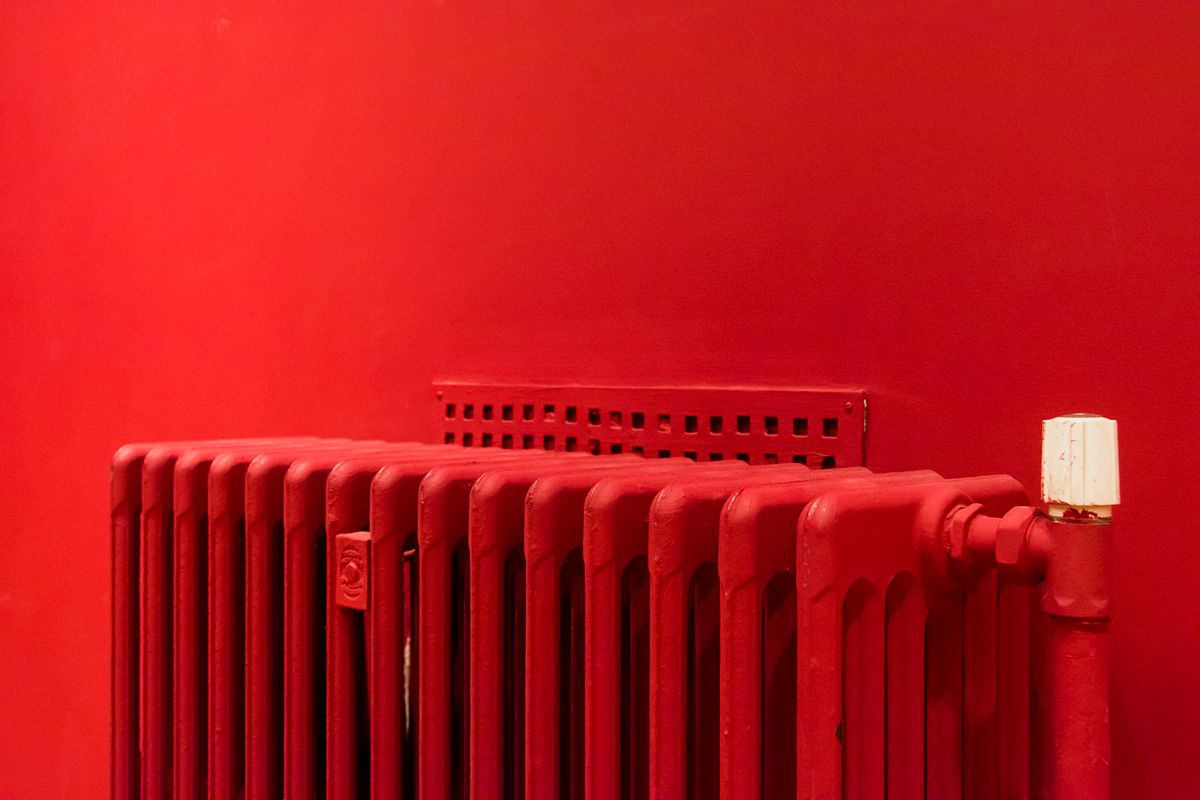
Check the two valves on the cold radiator first. The thermostatic valve, the white-headed valve with numbers on it, controls how much hot water enters. If it is turned right down to zero or to the frost setting, turn it up and give the radiator time to warm. The lockshield valve at the other end, under a small plastic cap, should be open as well. A closed valve keeps a radiator cold no matter how often you bleed it.
Valve pins can also stick, especially after a summer with the heating off. Take the white head off and you will see a small pin underneath. It should press down and spring back up. If it is stuck down, that valve is not letting hot water in. Try to free it gently, but never force it. Viessmann’s guide to a cold radiator explains this pin check and the other common causes in the same terms. If the pin will not move, or a valve is seized, leaking, or damaged, stop and book an engineer.
How to bleed a radiator safely, step by step
Bleeding is a homeowner-safe job. It does not involve the boiler casing, the gas supply, the flue, or any sealed part of the boiler. If a problem ever needs the boiler cover off, or touches the gas supply, stop and book a Gas Safe registered engineer. You need a radiator key and a cloth. Many modern radiators take a flat-head screwdriver instead of a key.
- Find the cold radiators. Run the heating for about twenty minutes, then feel each radiator from bottom to top. The ones warm low down but cool or cold across the top are the ones to bleed.
- Switch the heating off and let the radiators cool. Bleeding a hot radiator risks scalding, and the pump can pull more air in while it runs.
- Find the bleed valve. It is a small square fitting at one of the top corners, opposite the thermostatic valve. Hold the cloth underneath it.
- Turn the key slowly anticlockwise, about a quarter to a half turn. You will hear a hiss as air escapes. Never unscrew the valve fully, and never force a stiff valve. If it will not turn, stop rather than snapping it.
- Close the valve as soon as water appears. When the hiss stops and a trickle of water comes out, turn the key clockwise to close it. Snug is enough, not overtightened. Wipe away any water.
- Work through the other cold radiators one at a time. Start downstairs, finish upstairs, and close each valve properly before moving on.
- Check the boiler pressure. Bleeding lets a little water out, so on a sealed system the pressure will have dropped. See the next section before turning the heating back on.
- Turn the heating back on and re-check. Each radiator should now warm evenly. If one is still cold at the top after a careful bleed, do not keep bleeding it.
After bleeding: check the pressure
This is the step people miss most often. On a sealed system, such as a combi or system boiler, every radiator you bleed lets a little water out, and the pressure falls. Most sealed systems sit at about 1 to 1.5 bar when cold, but your boiler manual gives the right figure for your model. If the gauge has fallen below its normal cold reading, top the system up slowly through the filling loop, following the manual. If you have an older open-vented system with a tank in the loft, it refills itself and you can skip this step. If pressure keeps falling after topping up, or rises above 3 bar, call an engineer.
When bleeding does not fix it
Bleeding only removes air. If the problem is something else, bleeding again and again will not help, and it can mask a fault that needs attention.
- Cold at the bottom, not the top: this is sludge, not air. Sludge is rust and debris that settles in the base and blocks hot water flow. The fix is a chemical clean or power flush by an engineer. Our guide to a radiator cold at the bottom explains the difference in full, including what a flush involves.
- One radiator still cold after bleeding: check its valves again, then suspect flow. A stuck valve, a balancing problem, or a partial blockage needs an engineer.
- Downstairs cold, upstairs hot: this points to balancing. Balancing shares hot water fairly between radiators, instead of the nearest ones taking it all. It is easy to get wrong, so an engineer is often the safer choice.
- Black or very dirty water when you bleed: that is sludge. Note it, close the valve, and ask an engineer about a clean. Do not drain radiators yourself to clear it.
- Water leaking from a bleed valve after closing: the valve may be worn. Put a cloth under it, do not overtighten it, and get it replaced.
When to stop and call
Call an engineer if any of these apply: bleeding does not fix the cold top; the same radiator needs bleeding every few weeks; boiler pressure keeps falling or rising; a valve is seized, snapped, or leaking; bled water is black or dirty; or the boiler shows a fault code. Never open the boiler casing, and never touch the gas supply. Gas work is for a Gas Safe registered engineer only. If you can smell gas, leave the property and call the National Gas Emergency line on 0800 111 999. For a central heating service in Bradford, an engineer can find where air is entering, balance the system, or clean it properly. You can call Plumber Bradford Pros on 01274 041977.
What a fix can cost
Bleeding a radiator yourself costs nothing beyond a radiator key and a cloth. The costs below are UK guide averages, not this business’s prices.
| Job | UK guide average | What affects it |
|---|---|---|
| Power flush, 2-bedroom house, 6 radiators | £450 | Radiator count and property size |
| Power flush, 3-bedroom house, 10 radiators | £550 | Radiator count and property size |
| Power flush, 4-bedroom house, 15 radiators | £800 | Radiator count, time taken, severity of sludge |
| Power flush overall range | £350 to £800 | Smaller properties at the lower end, larger at the top |
These figures come from Checkatrade’s power flush cost guide, last updated June 2026, which notes most jobs take one day, or one to two days for a larger property. Always ask for a full breakdown first, because chemicals, a magnetic filter, or repairs found during the flush can be charged separately.
Why Bradford homes get this sooner
Bradford’s older terraces and back-to-back houses often run older heating systems, with radiators of different ages in one loop, loft tanks in some homes, and long pipe runs to upstairs rooms. Air gathers at the highest points, so a top-floor bedroom radiator is often the first to go cold at the top, while the ground floor still feels fine. Student lets add another pattern: radiators turned off in empty rooms over summer, then switched back on in autumn with air already trapped inside. None of this needs new pipework, just the right diagnosis: air, sludge, valve, or balancing.
Prevention: fewer cold tops next winter
- Bleed cold-topped radiators once, at the start of the heating season, and check the pressure afterwards.
- Keep radiators unblocked. Furniture against a radiator makes a cold spot harder to notice. The Energy Saving Trust’s cold-weather tips make the same point: bleed regularly and keep radiators clear.
- Have the system serviced once a year. An annual boiler service in Bradford picks up pressure problems, sludge, and tired valves before winter, rather than during it.
- After any work on the system, bleed the radiators touched and check the pressure within a day or two.
- Keep a note of which radiator needed bleeding and when. A pattern over a few months is the clearest sign that air is entering from somewhere.
Frequently asked questions
How do I know if my radiator needs bleeding?
If it is warm at the bottom but cold across the top after the heating has run for a while, it needs bleeding. Gurgling noises point the same way.
Should I bleed radiators with the heating on or off?
Off, and cool. Run the heating first to find the cold-topped radiators, then switch it off, let them cool, and bleed them. Bleeding a hot radiator risks scalding.
How far should I turn the bleed key?
About a quarter to a half turn anticlockwise, just enough to hear air hissing out. Never unscrew the valve fully, and close it clockwise as soon as water appears.
Why does my boiler pressure drop after bleeding?
Bleeding lets a little water out with the air, so on a sealed system the pressure falls. Top it up slowly to the figure in your boiler manual, usually about 1 to 1.5 bar when cold.
What if bleeding does not fix a cold radiator?
Then the cause is probably not air. A cold bottom means sludge, a completely cold radiator often means a valve or flow problem, and downstairs cold with upstairs hot means balancing. Each needs an engineer, not more bleeding.
How often should I bleed my radiators?
Only when one is actually cold at the top. If the same radiator needs bleeding every few weeks, air is getting into the system, and an engineer should find where it comes from.
Plumber Bradford Pros, 164 Dyson Street, Bradford BD9 4DE. Call 01274 041977.