Tree roots in your sewer line usually start with slow drains that keep coming back, gurgling toilets, and a drain that blocks again weeks after it was cleared. Roots get in through cracks and joints in older pipes, then catch waste and grow into a mass that narrows the pipe. Only a CCTV camera survey can confirm them, and only a fix that seals the entry point lasts. This guide covers the early signs, safe checks, repair options, guide costs, and who pays when the tree is not yours.
Find your situation first
- Several rooms slow at once: go to the early signs table.
- Same drain keeps blocking: go to why cutting alone is not a lasting fix.
- Repair options: go to fixing tree roots: the options compared.
- Costs: go to what tree root repairs cost.
- Neighbour’s or council’s tree: go to who pays for tree root damage.
How tree roots get into a sewer line
Roots grow towards moisture and nutrients, and a sewer pipe supplies both. A sound pipe is hard for a root to break into. Usually a tiny root hair finds a weakness: a hairline crack, an open joint, or a worn seal in an older clay pipe. Once inside, the root thickens and forces the gap wider. That is why the problem repeats: roots are a symptom of a damaged pipe as much as a cause of blockage. Older clay and concrete pipes, jointed every short length, give roots far more entry points than modern plastic pipe. Willow, poplar and other thirsty, fast-growing trees are the worst offenders.
The early signs of tree roots in your sewer line
One sign alone does not prove roots are the cause: a single slow sink is usually local. Roots become likely when several signs appear together, keep returning, or affect more than one fixture.
| Sign | What you will notice | What it may mean |
|---|---|---|
| Slow drains in several rooms | Bath, sink and toilet all drain slowly, and it returns | A partial blockage in a shared or main run |
| The same drain blocks again | Cleared, then blocked again weeks later, same place | Something still in the pipe is catching waste, such as a root mass |
| Gurgling sounds | Gurgling from a sink, bath or toilet when another fixture is used | Air trapped behind a partial blockage |
| Toilet backups | Toilet backs up or needs several flushes, other drains slow too | The main sewer run is narrowing |
| Bad smells | Drain smell cleaning does not clear, or a smell near a drain run | Waste trapped by roots, or leaking from a cracked pipe |
| Soggy or extra-green patches | Lawn patch stays wet without rain, or grows greener than the rest | Water leaking from a cracked pipe is feeding that patch |
| Dips or lifted paving | Dip in lawn or drive, or paving lifted near a drain run | Soil washed away by a leak, or large roots pushing upwards |
The pattern to watch for is repetition in the same place. The same main drain blocking every few months, with gurgling between blockages, is the classic root-intrusion pattern, and the point at which a camera survey stops being optional.
Checks you can safely make yourself
These checks gather evidence rather than diagnosing the pipe, which you cannot see from the surface.
- Note which fixtures are affected, and when. Several rooms together points to a main run; one fixture alone points to a local blockage. Timing matters too: after rain, after the washing machine drains, or all the time.
- Look outside along the drain run. Walk towards the road and look for soggy patches, extra-green grass, dips, lifted paving, or a smell near a cover. Do not lift a heavy cover yourself, and never climb into a manhole or chamber.
- Check what has already been done. If the same drain was cleared before, find out how: rodding, jetting, or a camera survey. A drain cleared without a camera check has never been inspected inside.
- Do not pour root killer down the drain as a first step. It can kill the roots inside the pipe, but it does not repair the crack they came through, and it leaves no record of how bad the pipe damage is.
Do not use drain rods or a jet washer on a sewer pipe yourself. A rod can push a root mass tighter or damage a cracked pipe further, and a jet can force sewage back through a lower fixture. Sewage is a hygiene risk: keep children and pets away.
How a CCTV survey confirms tree roots
A CCTV drain survey sends a small camera down the pipe and records what it finds, including the exact location of the problem. For roots, footage shows the root mass, the crack or joint it came through, and whether the pipe is sound or already cracked, displaced or collapsed. That decides the repair: a sound pipe needs sealing, a collapsed one replacing. Ask for the footage or report, not just a verbal verdict: it is the evidence you need if a neighbour, council, Yorkshire Water or insurer is involved. Our CCTV drain survey guide explains what a survey should include.
Fixing tree roots: the options compared
There is no single right fix: it depends on how bad the pipe damage is, which is why the camera survey comes first.
| Option | What it does | When it fits | Drawback |
|---|---|---|---|
| Mechanical root cutting | A rotating cutter clears the root mass inside the pipe | Restoring flow quickly, or before lining | Leaves the crack open; roots grow back |
| High-pressure jetting | A water jet clears roots and debris from pipe walls | Cleaning a sound pipe | Does not seal the entry point |
| Patch lining | A short resin sleeve seals one joint or crack from inside | One or two spots in a sound pipe | Only covers the lined section |
| Full pipe relining | A resin liner along a whole run makes a new pipe inside the old one | Several damaged joints, digging impractical | Not for a collapsed pipe |
| Excavation and replacement | The damaged section is dug up and replaced | Collapsed or badly broken pipe | Most disruptive, usually dearest |
Why cutting alone is not a lasting fix
Cutting roots out restores flow, and is useful in an emergency. But cutting a root is like pruning a plant: it grows back, often with several new shoots where one was cut. The roots return into the same open crack, thicker and more tangled, and blockages get more frequent. If you pay to clear the same drain every few months, the money goes on repeat clearances while the pipe damage stays open. A lasting fix pairs clearance with a seal. Ask what any engineer quoting a clearance plans for the entry point.
What tree root repairs cost
The figures below are UK guide averages from Checkatrade’s drain root intrusion guide, not this business’s prices. Your cost depends on pipe length, depth, access, and whether the pipe can be lined or must be replaced.
| Job | UK guide average | Notes |
|---|---|---|
| CCTV drain survey | £85 to £400 | Standard survey; rises with length and access |
| Drain patch repair | Around £200 to £450 | Localised repair to one section |
| Basic drain repair | £450 to £750 | A straightforward repair job |
| Replacement pipework | Average £635 per metre | Depends heavily on length and depth |
Relining usually sits between a patch repair and a full replacement, priced by length lined. The cheapest option on the day is almost always a clearance; the dearest outcome over time is a clearance repeated every few months while the pipe gets worse.
Who pays for tree root damage
Responsibility for drains decides who pays before any work starts. The split, set out in Yorkshire Water’s guidance on who is responsible for property pipes, is as follows.
| Pipe section | Usually responsible | What it means for roots |
|---|---|---|
| Private drain inside your boundary | You, the property owner | Normally your repair, even if the tree is not yours |
| Lateral drain outside your boundary, connected before 1 July 2011 | Usually Yorkshire Water | Report it first; do not pay for a public section yourself |
| Lateral drain connected after 1 July 2011, not adopted | Usually you, unless formally adopted | Check deeds and sewer records before assuming |
| Public sewer serving two or more homes | Yorkshire Water | Usually Yorkshire Water’s, even under your land |
Where the tree sits matters separately from where the pipe sits. If the roots come from a neighbour’s tree, the neighbour may be responsible for the damage, but the starting point is evidence: a CCTV report showing the roots and the damage, shared calmly, before any claim. If the tree is a council street tree, report it to Bradford Council with the same evidence and keep a copy. Clearing your own private drain usually falls to you first. Home insurance is worth checking, but do not assume it covers this: some policies cover root damage where there is serious structural damage, some do not cover it at all. Ask your insurer whether root intrusion is covered, before the work starts. If you rent, tell your landlord: drain repairs are normally the landlord’s responsibility.
Bradford gardens: why this problem is common here
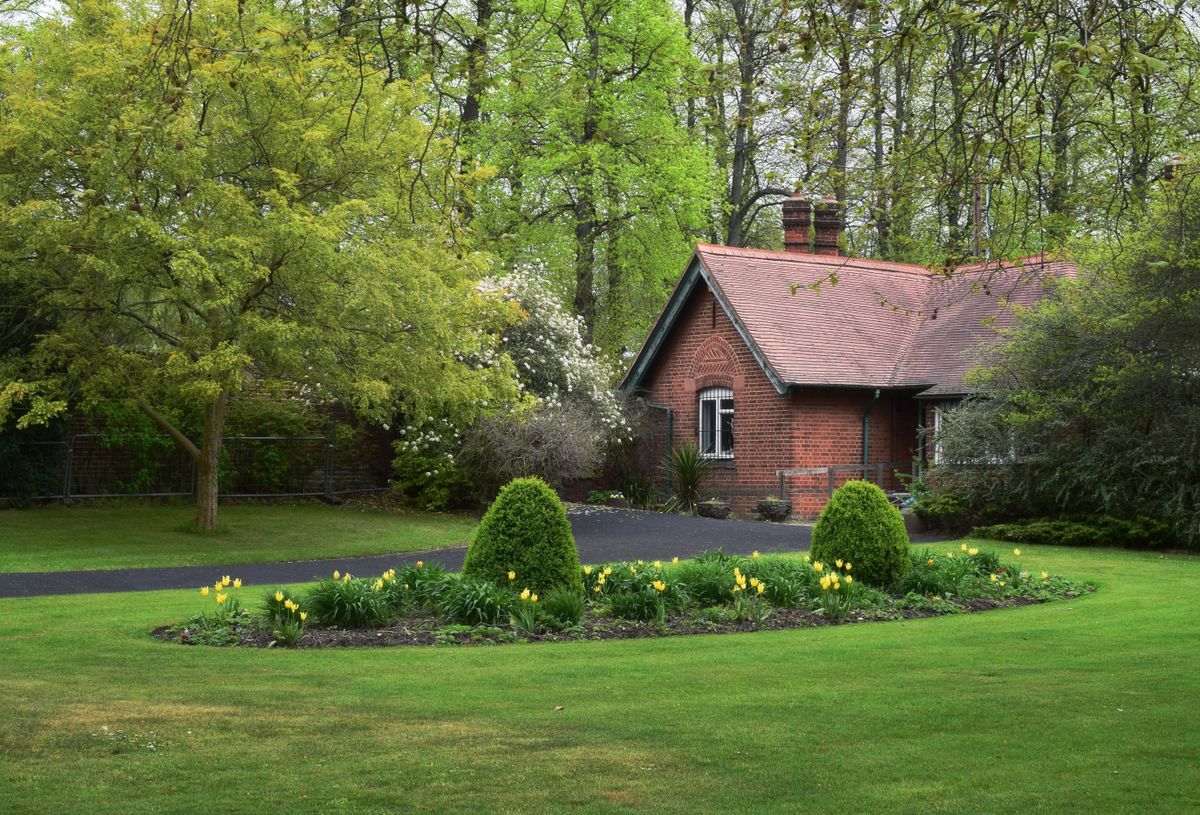
Bradford has many older terraced and stone-built homes with clay drainage pipes laid decades ago, and mature street and garden trees planted close to the house. That combination — old jointed pipes plus mature trees in small front gardens — is what roots exploit.
Shared drains add a second Bradford wrinkle. In terraces and back-to-backs, one drain run often serves several homes, so a root problem in a shared section can show up as slow drains in more than one house. If neighbours have the same symptoms, that points to a shared or public section. Ask them before paying for work that may not be yours.
When to stop and call
Stop and call a drainage engineer if any of the following apply. Do not keep using a drain that backs sewage into the home:
- Sewage is coming back through a toilet, bath or outside gully.
- The same drain has blocked more than once in a few months.
- Several rooms are slow or gurgling at the same time.
- You can see a dip, sinkhole or soggy patch near a drain run.
- A previous clearance had no camera survey, and the problem has returned.
- You are unsure whether the damaged section is yours, shared or public.
For a lasting repair rather than another clearance, contact our sewer line repair in Bradford service, or call 01274 041977. A camera survey first means the repair is chosen from evidence, and gives you the report you need if a neighbour, the council, Yorkshire Water or an insurer is involved. Our drainage services in Bradford cover the survey and the repair together. Never climb into a manhole or chamber, and never lift a heavy cover alone. Gas work is for a Gas Safe registered engineer only, never open a boiler casing, and if you smell gas, leave the property and call 0800 111 999.
Preventing the next root problem
- Plant new trees well away from drain runs. Check the mature spread before planting, and keep thirsty, fast-growing trees furthest from pipes.
- Survey again if you have a history of roots. A repeat camera check every few years catches regrowth before it blocks again.
- Fix small joint damage early. A patch lining is far smaller than a full reline or excavation later.
- Do not ignore a repeat blockage. A drain that blocks twice in the same place is telling you something about the pipe.
Frequently asked questions
Can tree roots break a healthy sewer pipe?
Rarely on their own. They normally enter through an existing crack, open joint or worn seal, then grow and force the gap wider. A camera survey shows whether the pipe was already damaged before the roots arrived.
How do I know if tree roots are causing my blocked drain?
The pattern is the clue: slow drains in several rooms, gurgling, and the same drain blocking again after it was cleared. Only a CCTV camera survey can confirm roots.
Will cutting the roots out fix the problem permanently?
No, not on its own. Cutting restores flow, but the crack stays open and the roots grow back, often thicker. A lasting fix seals the entry point with patch lining, full relining, or replacement.
Who pays if the tree belongs to my neighbour or the council?
The pipe section decides who pays for the repair, and the tree owner may be responsible for damage their tree causes. Start with a CCTV report as evidence, then speak to the neighbour or report a council street tree to Bradford Council.
Does home insurance cover tree root damage to drains?
It depends on your policy: some cover root damage where there is serious structural damage, some do not cover it at all. Check before the work starts.
Should I use a chemical root killer?
Not as a first step. It can kill roots inside the pipe, but it does not repair the crack they came through, and it leaves no record of how bad the pipe damage is. Get a camera survey first.
Plumber Bradford Pros, 164 Dyson Street, Bradford BD9 4DE. Call 01274 041977 for help with sewer line repairs in Bradford.